

Posted by Jonathan Atan
on November 27, 2025

From reducing puffiness to supporting post-workout recovery, the benefits of lymphatic drainage massage are all about creating a sense of lightness and well-being. This gentle technique helps encourage the natural flow of lymph fluid, supporting your body's performance.
What Is a Lymphatic Drainage Massage?
Think of your lymphatic system as your body’s internal cleanup crew. It's a network of vessels and nodes that works behind the scenes, helping to clear out waste and keep your fluid levels balanced.
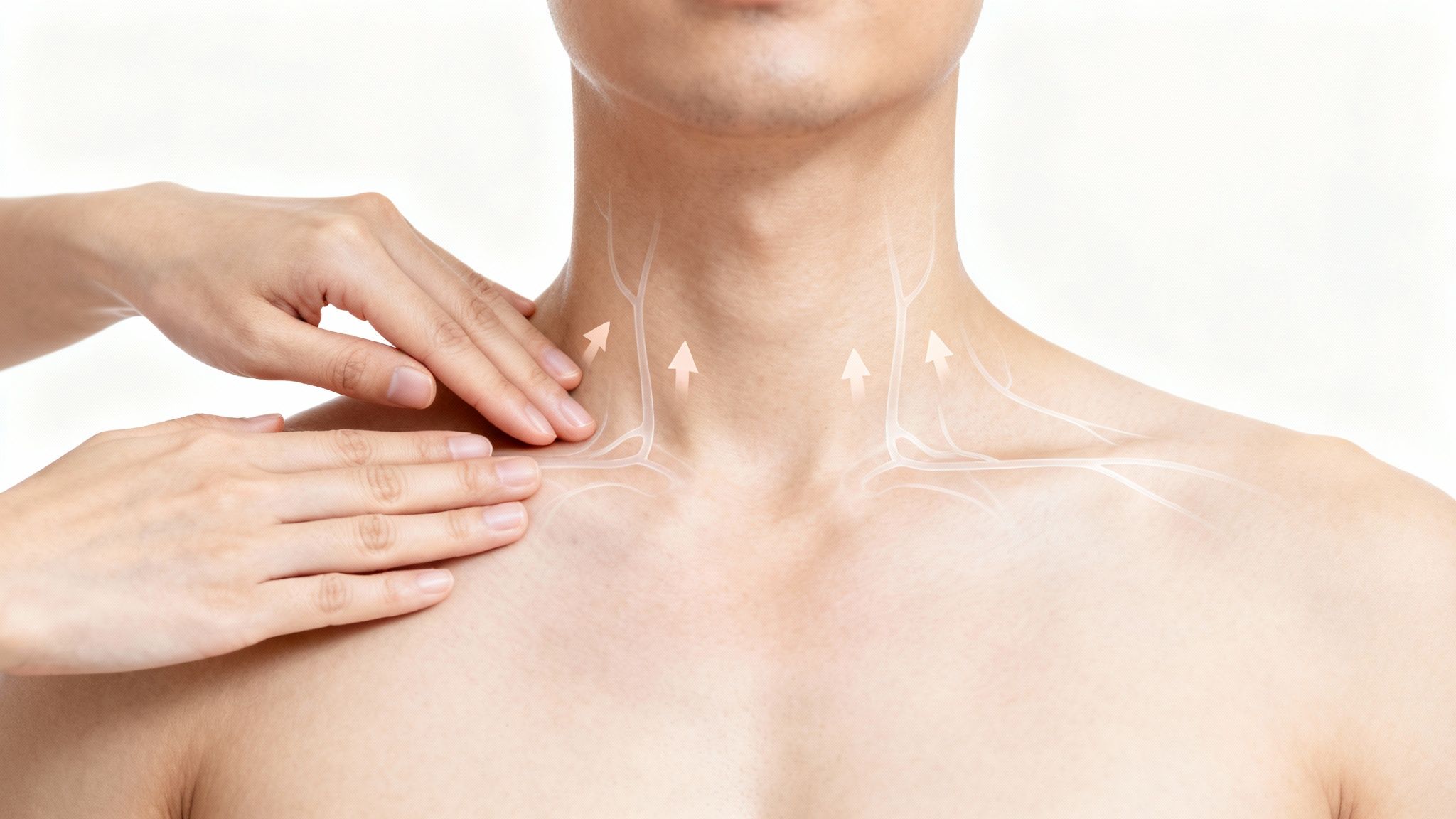
Unlike a deep tissue massage that targets muscle knots, a lymphatic drainage massage uses a very light, rhythmic touch. The goal is to gently stretch the skin, which stimulates the delicate lymphatic vessels just underneath.
This subtle prompting helps keep the system flowing smoothly, especially when it becomes sluggish from inactivity, long flights, or recovering from surgery. If you're curious about how this ties into skin appearance, you can explore the comprehensive role of lymphatic drainage in skin health.
This isn't just a "feel-good" treatment; it has proven supportive benefits. One study found that women who received manual lymph drainage after surgery had a 40% lower incidence of secondary lymphedema. You can read more about these important wellness findings for yourself.
How It Helps Reduce Swelling and Puffiness
Ever feel that heavy, puffy sensation after a long flight or a day at your desk? That's often fluid retention—your body’s internal plumbing getting a bit backed up. This is where a lymphatic drainage massage shines.
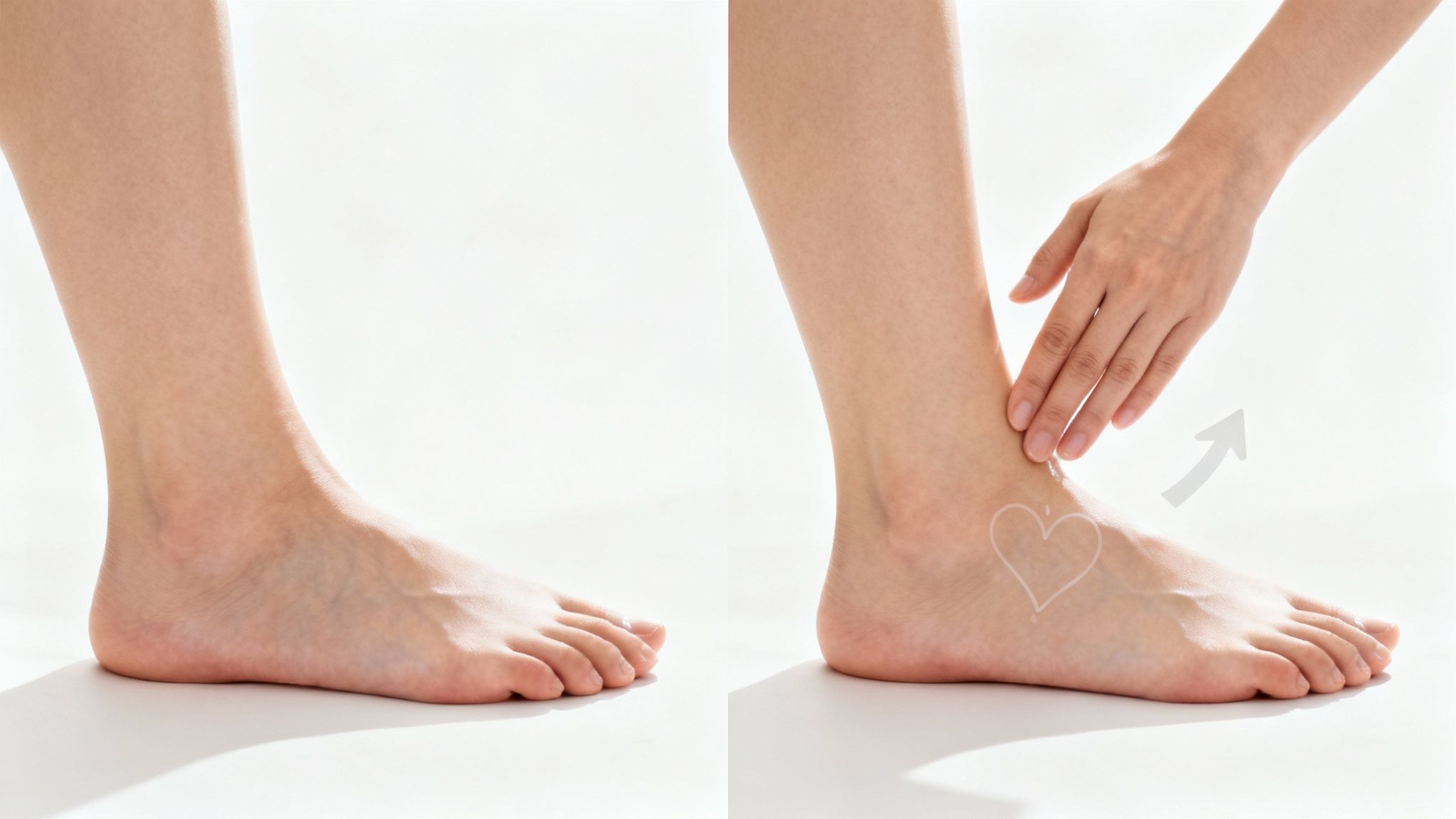
When the lymphatic system gets congested, fluid can pool in your tissues. This can result in noticeable swelling, especially around the legs, ankles, and even your face.
The Gentle Nudge Your Body Needs
A lymphatic drainage massage gives that sluggish fluid the nudge it needs to get moving again. The technique uses light, rhythmic strokes designed to stimulate the lymphatic vessels just under your skin. It gently guides fluid back into circulation so your body can process it.
This process is fantastic for reducing the fluid buildup that makes you feel swollen and heavy. It's also one of the great ways to improve blood circulation naturally, which supports a healthy lymphatic system.
"By encouraging lymph flow, this technique helps reduce fluid buildup and can decrease swelling more rapidly. This supports the removal of healing byproducts, which can lead to a more comfortable recovery from everyday strains or physical activity."
This gentle approach is a game-changer for:
- Office Professionals: Helps undo the effects of sitting all day.
- Frequent Travelers: A must for beating that "jet-leg" puffiness.
- Active Individuals: Gives your body’s natural recovery a boost.
Ultimately, it helps clear out congestion, leaving you feeling less weighed down and more comfortable.
Supporting Your Post-Workout Recovery
For anyone who trains hard, bouncing back quickly is everything. That post-exercise soreness and fatigue often come from metabolic byproducts left behind in your muscles. Your lymphatic system is the natural "cleanup crew" in charge of clearing it all out.
One of the best benefits of lymphatic drainage massage is its power to give this natural recovery cycle a boost. The gentle, rhythmic strokes help get lymphatic fluid moving, which aids in flushing waste products from your tissues more efficiently. This often means less muscle soreness and a quicker return to peak performance.
Enhancing Your Recovery Toolkit
While not a direct replacement for manual massage, you can support your recovery at home. Using a tool like the Cryotex Massage Gun on a low, gentle setting helps promote healthy circulation in the muscles around key lymphatic areas, like your armpits, neck, and groin. This gives your body’s recovery process the support it needs.
To learn more about optimizing your downtime, check out our complete guide on how to speed up muscle recovery at home.
"I started incorporating light massage after my long runs, and the difference in soreness the next day is incredible. It feels like I'm giving my body the reset it needs to come back stronger." - Customer from Chicago, IL
The science backs this up. One analysis found that people who received consistent manual lymphatic drainage (MLD) reported a significant drop in both limb swelling and pain. You can read the full research about these findings to see the data for yourself.
By making lymphatic support part of your routine, you’re not just soothing sore muscles—you’re actively helping your body’s natural cleanup crew do its job better.
A Boost for Your Overall Wellness
The perks of a lymphatic drainage massage aren't just physical—they can impact your mental state, too. The slow, rhythmic, and gentle motions are incredibly calming, helping to shift your body out of a stressed state and into a state of rest.
This peaceful feeling comes from activating your parasympathetic nervous system, which is your body’s natural "rest and digest" command center. When it kicks in, your mind can quiet down, and feelings of being overwhelmed may lessen. It's a fantastic way to reset after a hectic week.
A Total Reset for Your Mind and Body
By giving a helping hand to one of your body’s important systems, the massage can create a feeling of lightness from head to toe. This makes it a perfect addition to any self-care ritual.
"This gentle technique is like hitting the refresh button for your entire system. It helps clear out the fluid buildup that makes you feel heavy and sluggish, leaving you with a deep sense of lightness and calm that supports both your body and mind."
Many people report feeling clearer, lighter, and more grounded after a session. If you’re interested in other ways to use massage for well-being, check out our guide on Using Massage for Muscle Recovery. Think of it as a full-body tune-up.
Your Guide to Safe Lymphatic Self-Massage
Ready to try lymphatic drainage at home? The technique is built on three simple principles: a gentle touch, a specific direction, and a calm, steady rhythm. No intense pressure is needed here.
Always check with a doctor before starting any new wellness routine, especially if you have pre-existing health conditions. When you get the green light, find a quiet spot and get comfortable. Using high-quality massage oils can help your hands glide effortlessly over your skin.
The Three Golden Rules
To do this right, just remember three things: pressure, direction, and pace. Getting these fundamentals down helps you gently stimulate your lymphatic system. If you struggle with tension in your neck, our guide on self-massage for headaches offers complementary techniques.
Think of it like this:
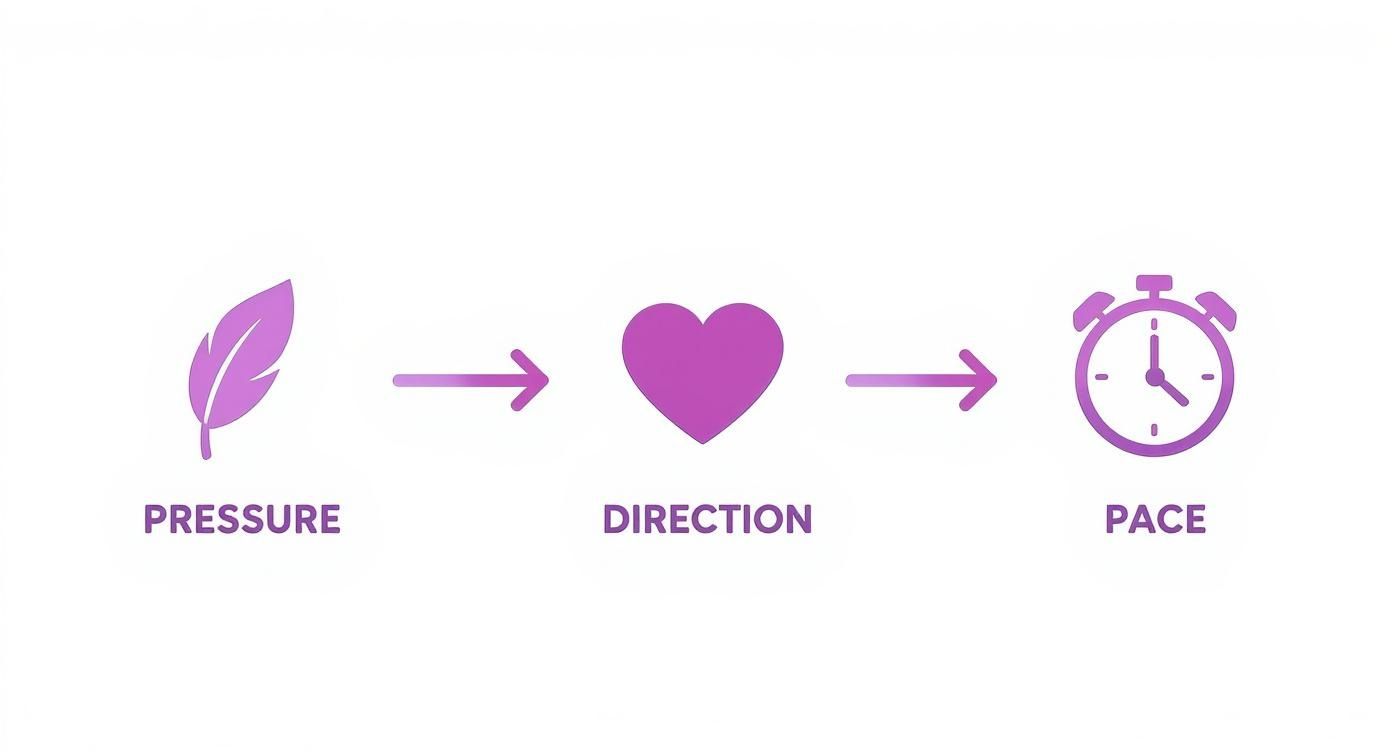
The image perfectly captures the essence: a feather-light touch, all strokes moving toward the heart, and a slow, deliberate pace.
Here is a quick summary of the essential principles for a safe self-massage.
Key Principles of Safe Lymphatic Self-Massage
| Technique | Description | Why It's Important |
|---|---|---|
| Feather-Light Pressure | Use just enough pressure to gently stretch the surface of the skin. | The lymphatic vessels are located just beneath the skin, so deep pressure can flatten them and disrupt fluid movement. |
| Direction Toward the Heart | Always massage toward the center of your body where major lymph nodes are. | This follows the natural flow of the lymphatic system, helping to guide fluid toward drainage points for processing. |
| Slow, Rhythmic Pace | Perform each stroke slowly and deliberately, pausing between movements. | The lymphatic system operates at a slower pace than your circulatory system; a slow rhythm matches its natural flow. |
These principles are the foundation of an effective lymphatic drainage massage.
Here are a few easy techniques to get you started:
- For Your Neck: Place your fingertips just below your ears. Gently glide the skin down toward your collarbone. Repeat 5 to 10 times on each side.
- For Your Arms: Start at your wrist. Use your other hand to make light, sweeping strokes up your arm toward the lymph nodes in your armpit.
- For Your Legs: Begin at your ankle. With both hands, make gentle, upward strokes toward the lymph nodes in your groin.
"Always remember, this massage should feel soothing, never painful. The pressure should be just enough to move the skin, not the muscle underneath. That feather-light touch is the secret to making it work."
When to See a Certified Professional
While DIY massage is great for daily support, some situations call for an expert's touch. Think of at-home care like your daily fitness routine, while seeing a pro is like working with a personal trainer for specific goals.
A certified Manual Lymphatic Drainage (MLD) therapist can provide a comprehensive, full-body treatment. This is especially helpful when navigating specific health challenges, like post-surgical recovery where the body’s lymphatic system may be sluggish. Always get your doctor’s approval first.
Finding the Right Expert
When looking for a qualified practitioner, check for specific credentials. You need someone who knows exactly what they're doing.
- Certified Lymphedema Therapist (CLT): This is the gold standard. A CLT has advanced, specialized training in the lymphatic system.
- Ask About Their Experience: Don't be shy! Ask if they have experience with your specific needs, whether for post-operative recovery, athletic performance, or general wellness.
Making an informed choice helps you get the most out of every session. For your day-to-day wellness, remember that supporting your muscles and circulation at home is also crucial. Discover our full range of wellness tools on our Massage Guns category page to complement your professional treatments.
Frequently Asked Questions
Still curious about how lymphatic drainage massage can support your wellness? Here are the top questions we hear—and our straightforward answers.
How Often Should I Get This Massage?
It depends on your personal goals.
- General Maintenance: Once a month can help keep things flowing.
- Post-Activity Recovery: Twice or even three times a month can help clear metabolic waste after workouts.
- Travel Puffiness: A session within 24 hours of a long flight may help reduce swelling.
A certified therapist can help you create a schedule that fits your needs.
Is Lymphatic Drainage Massage Painful?
No, it should not be painful.
- Deep Tissue Massage: Works on tight muscles.
- Lymphatic Drainage: Uses feather-light, rhythmic strokes on the skin’s surface to encourage fluid movement.
The result is a soothing, almost meditative experience.
Can I Use a Massage Gun for It?
No, massage guns are not designed for lymphatic drainage.
- Lymphatic Drainage Requires: An ultra-gentle, manual technique.
- Massage Guns Deliver: Focused power and vibration to muscles, which is too intense for delicate lymphatic vessels.
Stick with a trained therapist for true lymphatic support. The Cryotex Massage Gun is excellent for muscular recovery but should not be used for this specific technique.
At BestMassageGun.com, we believe in empowering your recovery journey.
Shop the Cryotex Holiday Bundle — 4 FREE Turkish Towels
