

Posted by Jonathan Atan
on November 22, 2025

For anyone serious about fitness—from dedicated athletes to weekend warriors—the right recovery tools are a game changer. The best recovery tools for athletes are those that fit your specific needs, combining real effectiveness with the convenience that makes you want to use them every day.
Think of percussive massage guns for deep-tissue work, foam rollers for all-over muscle release, and compression systems to support circulation. The secret isn't one magic tool; it's about building a routine that helps your body heal itself more efficiently.
Why Making Recovery a Priority Changes Everything
You know that post-workout soreness? While it’s a sign you’re making progress, how you deal with it dictates how fast you can get back to training at your peak.
Effective recovery isn't just about kicking your feet up. It’s about actively helping your muscles repair, rebuild, and get stronger. This is where the right recovery tools can make a massive difference.
Think of it this way: recovery is the other half of your training. A structured recovery routine helps reduce the risk of injury, cuts down on dreaded delayed onset muscle soreness (DOMS), and improves your overall performance.
The Growing Demand for Smarter Recovery
The buzz around athletic recovery isn't just hype; it's a huge, fast-growing market.
The global demand for recovery tools is expected to jump from USD 1.5 billion in 2025 to USD 3.5 billion by 2035. This boom is driven by a growing awareness of health and the awesome, easy-to-use devices now available. You can dig into more insights on the recovery tools market over at Fact.MR.
This trend shows a big shift in how we approach fitness. Instead of just grinding harder, people are working smarter. They're investing in tools that support long-term health and consistent performance.
From grab-and-go massage guns like the Cryotex to high-tech compression systems, modern tech has made professional-grade recovery accessible at home. To learn more, check out our guide on how to improve muscle recovery at home.
"I used to think recovery was just taking a day off. Now, using my massage gun for 15 minutes post-workout makes my 'off day' feel twice as effective. It’s a must-have for anyone serious about their fitness." - Alex R., Chicago Customer
This guide will cut through the noise to show you which tools will work for you. We’ll look at everything from active tools you control to passive ones that do the work while you relax. Our goal is to help you build a personalized recovery kit that keeps you feeling strong, mobile, and ready for what's next.
Ready to find your perfect match? Explore our complete collection of recovery tools.
Quick Guide to Top Muscle Recovery Tools
With so many options out there, it can be tough to know where to start. Here's a quick summary of the most popular recovery tools, their primary benefits, and who they are best suited for.
| Tool Type | Primary Benefit | Best For |
|---|---|---|
| Massage Guns | Targeted deep-tissue relief and loosening tight muscles | Athletes, gym-goers, and anyone with specific muscle knots or soreness |
| Foam Rollers | General muscle release and improving flexibility | Runners, lifters, and individuals looking for an affordable, all-around tool |
| Compression Boots | Enhancing circulation and reducing swelling | Endurance athletes, people on their feet all day, or post-intensive training |
| Massage Balls | Pinpoint pressure for hard-to-reach areas (feet, back, shoulders) | Anyone with localized pain or tightness, especially in smaller muscle groups |
| Cold Plunge Tubs | Reducing inflammation and speeding up muscle repair | High-intensity athletes and those looking for a powerful, full-body recovery |
This table should give you a solid starting point for figuring out what might work best for your routine and fitness goals. Remember, the best tool is the one you'll use consistently.
Using Active Tools for Targeted Muscle Relief
When you need to get hands-on with your recovery, active tools are the way to go. These are devices you physically use to work on tight spots and sore muscles, giving you total control over the pressure. That's why they’re some of the best recovery tools for athletes—they offer immediate, precise relief.
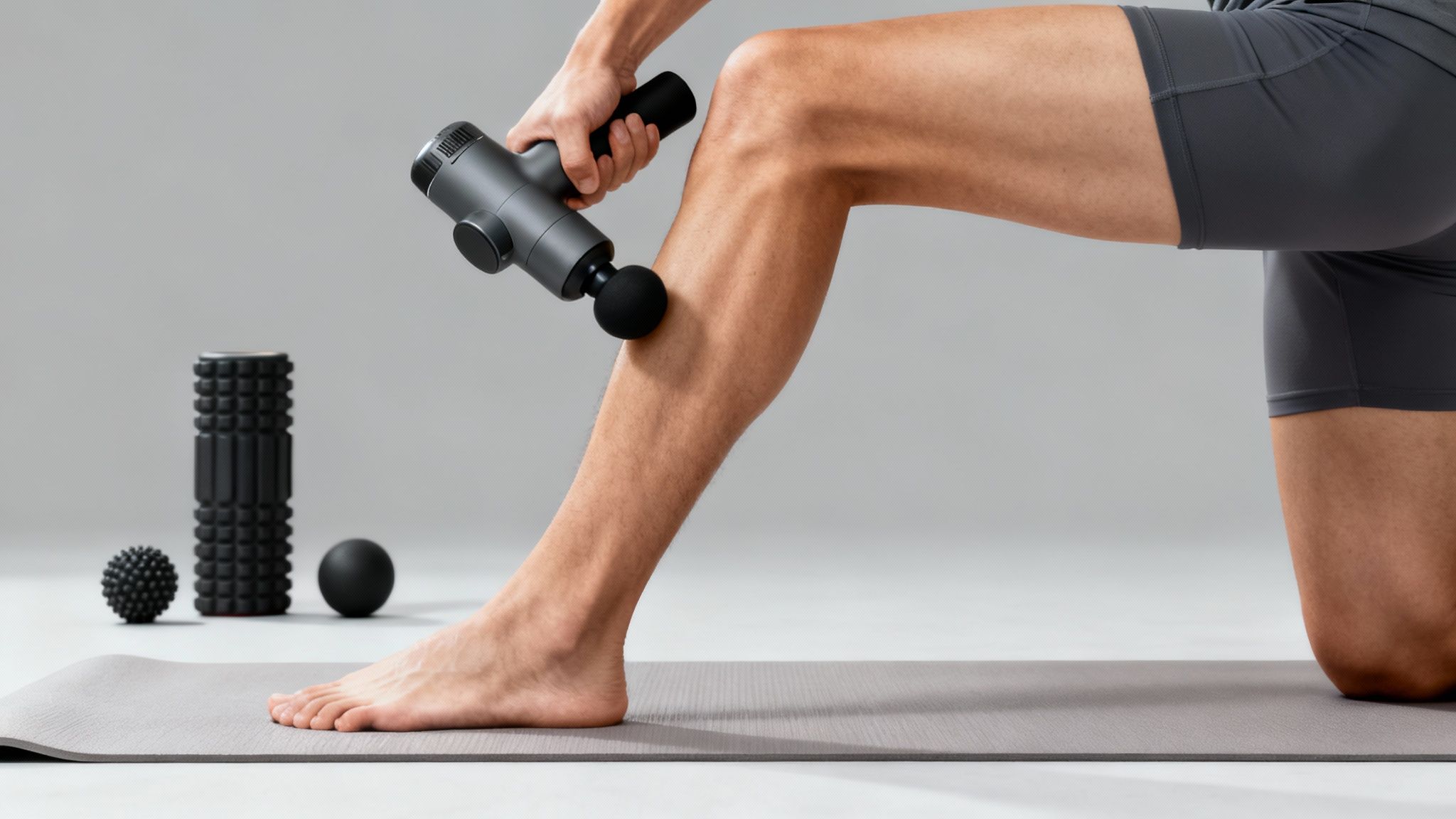
This hands-on approach puts you in the driver’s seat, letting you find and release tension exactly where you feel it most. Let's break down the most effective active recovery tools.
Percussive Therapy for Deep Relief
Percussive therapy devices, or massage guns, are absolute game-changers. They use rapid, focused pulses to get deep into muscle tissue, which helps break up knots, support circulation, and reduce post-workout ache. Finding the best massage gun can make a world of difference for an athlete who needs targeted therapy on demand.
A powerful device like the Cryotex Massage Gun is built for this. It’s perfect for warming up muscles before a session or helping them recover afterward.
"I keep my Cryotex in my gym bag. Just a few minutes on my quads and shoulders after lifting makes a huge difference in how I feel the next day. The soreness is way less intense." - Jessica L., New York Customer
Proper technique is everything. Always start on the lowest speed and let the device float over the muscle—never press down hard. Avoid using it directly on bones and joints, as the gun does all the work for you.
Foam Rollers for All-Over Release
Foam rolling is a classic for a reason. It’s an affordable and effective way to tackle tightness across big muscle groups like your quads, hamstrings, and back.
Not all rollers are the same. Here’s a quick guide:
- Low-Density Rollers: These are soft and forgiving, perfect if you're new to rolling or very sore.
- High-Density Rollers: These are firm and deliver a more intense massage, great for seasoned athletes.
- Textured Rollers: With grids and knobs, these mimic a massage therapist's hands, letting you dig into knots.
To use a foam roller correctly, roll slowly over the target muscle. When you hit a tender spot, pause on it for 20–30 seconds to let the muscle relax. Be sure to avoid rolling directly on your lower back or joints.
For more helpful tips, our guide on the best massage gun for athletes offers great info on complementary recovery techniques.
Massage Balls for Pinpoint Accuracy
While foam rollers are great for large areas, massage balls are your precision tool. They excel at hitting small, hard-to-reach spots—like the arches of your feet, deep in your glutes, or between your shoulder blades. Their small size lets you apply direct pressure to release trigger points bigger tools can't reach.
Hands-on recovery is booming. The massage therapy segment of the fitness recovery market is projected to grow to a massive USD 24.53 billion by 2035. This shows how much people value targeted, effective relief they can control themselves.
How Passive Recovery Can Accelerate Healing
Sometimes, the best thing you can do for your body is let a great tool do all the work. That's the beauty of passive recovery.
These solutions are designed to help your body repair while you kick back and rest. They're some of the best recovery tools for athletes, especially on rest days or after a tough session. Instead of actively rolling or stretching, you can relax and let technology amplify your body's natural healing processes.
Compression Therapy for Enhanced Blood Flow
If you've ever felt that heavy, lead-like feeling in your legs, pneumatic compression systems are a game-changer. These boots and sleeves use compressed air to gently squeeze and release your limbs, creating a pulsing massage that is incredible for supporting circulation.
This process helps flush out metabolic byproducts that build up during a workout and brings fresh, oxygen-rich blood to your muscles. It's a must-have for endurance athletes or anyone who spends a lot of time on their feet.
Using compression boots after a long run feels like hitting a reset button. The next morning, my legs feel lighter and far less sore than they used to. It has completely changed how I approach recovery.
For a closer look at how these systems supercharge recovery, you can learn about tools like Hyperice compression boots. Adding them to your routine can make a massive difference in how quickly you bounce back.
Temperature Therapy: Hot vs. Cold
Using temperature for recovery isn't new, but today's tools have made it more precise and effective. The two main approaches, cold and heat, serve very different purposes.
Cryotherapy (Cold)
- Primary Benefit: The ultimate tool for reducing inflammation and numbing sore spots.
- How It Works: Cold exposure causes blood vessels to constrict, which limits swelling and dulls nerve activity for immediate relief.
- Best For: Right after a high-intensity session. A session of 10–15 minutes is all you need.
Infrared Heat (Hot)
- Primary Benefit: Amazing for muscle relaxation and improving blood flow.
- How It Works: Heat causes blood vessels to dilate, or widen. This ramps up circulation, delivering more nutrients and oxygen to muscle tissue.
- Best For: Before a workout to warm up stiff muscles or on recovery days to ease general tightness. Avoid it on fresh injuries where there's swelling.
So, how do you choose? It comes down to timing and your goal. Cold is your go-to for immediate, post-exercise inflammation. Heat is your friend for chronic tightness and getting your body ready to move.
Choosing the Right Recovery Tool for Your Sport
Let’s be honest: the best recovery tool is the one you’ll actually use.
A marathon runner and a powerlifter have different recovery needs, just as a frequent traveler needs something different than someone with a home gym. Picking the right tool means it fits your life and delivers real results.
So, the first question is about your daily routine. Are you constantly on the go, or do you have a dedicated space to unwind? When it comes to the best recovery tools for athletes, practicality is just as important as performance.
This decision tree is a great starting point for matching passive recovery tools to your workout intensity.
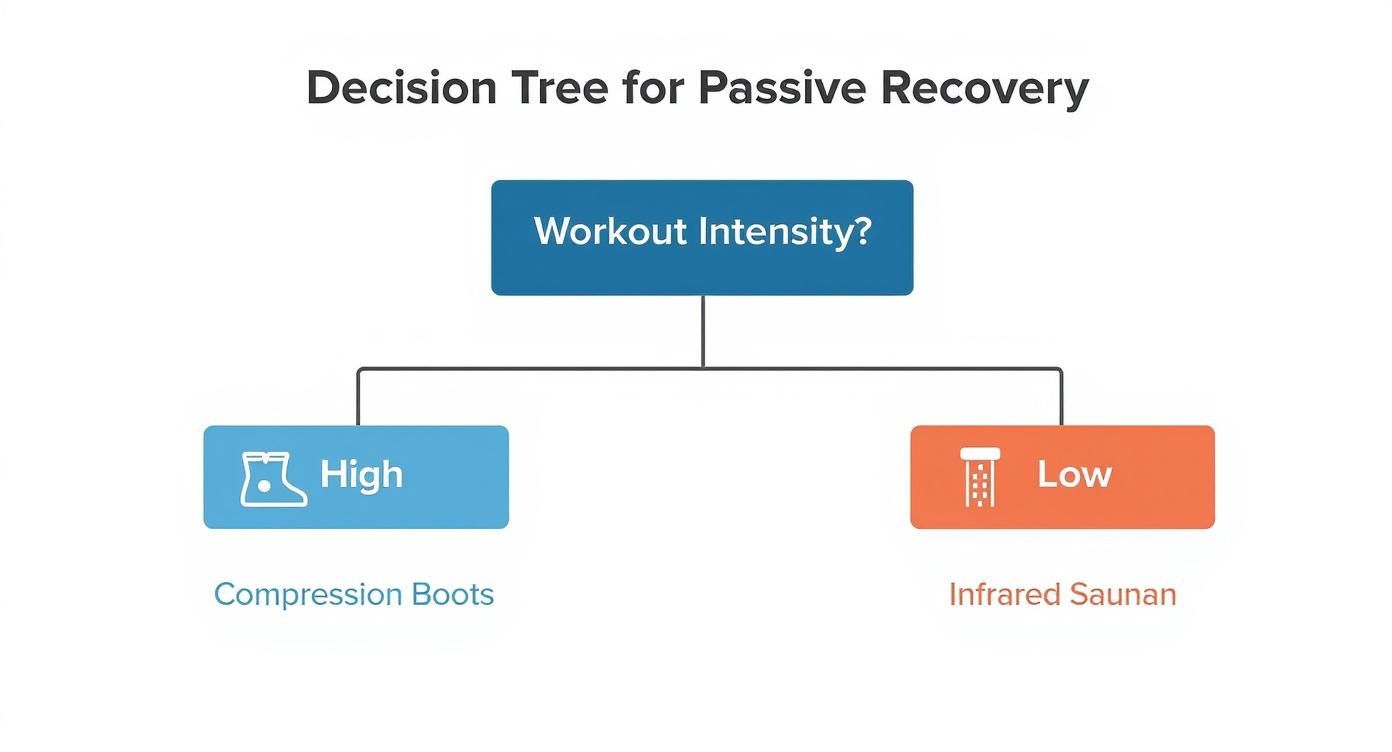
As you can see, a high-intensity workout calls for tools like compression boots to support circulation. On the other hand, a lighter day is perfect for the gentle warmth of an infrared sauna.
Matching Tools to Your Activity
Your sport determines which muscles take the most impact, so your recovery game needs to be specific. A one-size-fits-all approach won't cut it when you're chasing peak performance.
Here’s how it breaks down:
- For the Runner: After pounding the pavement, your legs need relief. Compression boots are a game-changer for reducing that heavy-leg feeling. A massage ball is also a must-have for targeting the arches of your feet.
- For the Weightlifter: Your goal is hitting specific muscle groups that have been under stress. A powerful percussive massage gun is your best friend for working on knots in your quads, glutes, and shoulders.
- For the Yogi or Pilates Enthusiast: Mobility and flexibility are key. A soft foam roller is perfect for gently lengthening muscles and releasing tight fascia.
Find Your Perfect Recovery Tool Match
Still not sure where to start? This table breaks down our top recommendations for common activities to help you find the perfect fit.
| Activity / Sport | Recommended Tool | Key Benefit |
|---|---|---|
| Running / Cycling | Compression Boots | Enhances circulation and reduces leg soreness |
| Weightlifting / CrossFit | Percussive Massage Gun | Targets deep muscle knots for faster repair |
| Yoga / Pilates | Soft Foam Roller | Improves flexibility and releases fascia |
| Team Sports (Soccer, Basketball) | Massage Ball | Pinpoints trigger points in feet, glutes, and back |
| Desk Job / Frequent Travel | Cryotex Massage Gun | Portable relief for neck and shoulder tension |
Picking the right tool is the first step, but making it a consistent part of your routine is what truly unlocks better performance.
Considering Your Lifestyle
Where and how you recover is just as crucial as what you do. Your lifestyle is a huge factor in deciding which tools will become daily essentials.
If you’re always on the move, portability is everything. A compact and quiet device like the Cryotex Massage Gun is a lifesaver for travelers or anyone needing quick relief at the office. It’s small enough to toss in a gym bag or carry-on.
"As a consultant who travels weekly, my Cryotex is a non-negotiable part of my packing list. It helps me work out the kinks from long flights and hotel beds. It's quiet enough that I can use it without disturbing anyone." - Mark P., Los Angeles Customer
If you have a dedicated recovery space at home, you can go bigger. Think an infrared sauna blanket or a full compression boot system. These are perfect for creating a personal sanctuary where you can completely recharge.
The goal is to find tools that slide seamlessly into your life. Ready to find your perfect match? Check out our complete collection of recovery tools.
Why Sleep and Nutrition Are Your Ultimate Recovery Tools
It's easy to get caught up in high-tech gadgets, but they're just amplifiers, not replacements for the fundamentals.
The real secret to unlocking your body's full potential lies in two powerful resources: sleep and nutrition. Mastering these will make every other tool in your recovery kit work ten times better.
Think of your body like a high-performance car. A massage gun is like a mechanic who fine-tunes the engine, but sleep and nutrition are the premium fuel it needs to run. Without them, even the best recovery tools for athletes can only do so much.
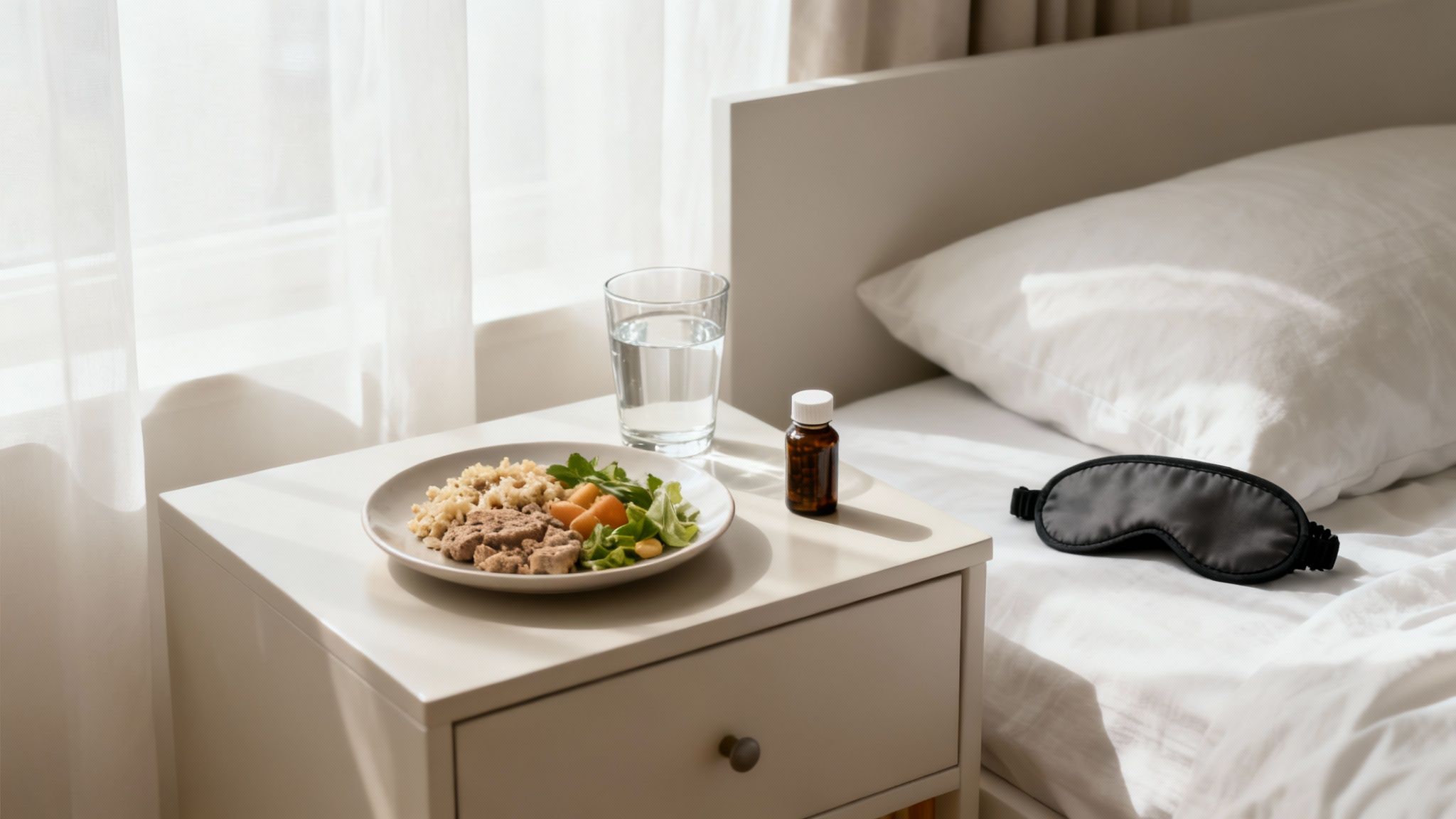
The Unbeatable Power of Quality Sleep
Let's be clear: sleep is the single most effective recovery tool in existence. Period.
It’s during these crucial hours that your body repairs muscle tissue, balances hormones like cortisol and testosterone, and locks in what you learned that day to keep you sharp.
Research consistently shows that sleep is the most effective recovery tool for athletes. Experts agree that consistent, high-quality sleep is critical for muscle repair, hormonal balance, and cognitive function.
For anyone serious about performance, optimizing sleep isn't optional. This a guide for restorative rest is a great place to start learning natural methods for deeper sleep.
Practical Steps for Better Sleep Hygiene
You don’t need to completely overhaul your life to see a difference. Small, consistent changes can deliver massive results.
Here are a few simple tips:
- Create a Cool, Dark Cave: Your body sleeps best when it's cool, dark, and quiet. Think blackout curtains and a lower thermostat setting.
- Ditch the Blue Light: The light from your phone and TV can disrupt your natural sleep cycle. Put screens away at least an hour before bed.
- Build a Wind-Down Routine: A relaxing habit—like reading, gentle stretching, or listening to calm music—signals to your body that it's time to shut down.
Fueling Your Body for Optimal Repair
Just as important as rest is what you put into your body. Proper nutrition and hydration are the building blocks for muscle repair and managing inflammation.
After a tough workout, your body needs specific nutrients to start healing.
Focus on these key areas to get the most out of your training:
- Protein for Rebuilding: Aim for a quality protein source within an hour or two after your workout to kickstart the muscle-rebuilding process.
- Carbs to Refill the Tank: Carbs are essential for replenishing glycogen, your muscles' primary energy source. Don't skip them.
- Anti-Inflammatory Foods: Load up on foods rich in omega-3s (like salmon and walnuts) and antioxidants (from berries and leafy greens) to help your body manage inflammation.
- Hydration Is Everything: Water is vital for moving nutrients where they need to go and flushing out waste products.
When you nail these fundamentals, you create the perfect internal environment for recovery. To dive deeper, check out our guide on how to improve muscle recovery with more smart strategies.
Common Questions About Athletic Recovery Tools
Diving into the world of recovery tools can bring up a lot of questions. We get it. Below, we tackle some of the most common ones to give you clear, straightforward answers.
1. How Often Should I Use My Massage Gun?
This is a big one. When it comes to massage guns, consistency is key, but more isn't always better.
A great starting point for most people is 10–15 minutes per session, three to four times a week. Focus on each major muscle group for just a minute or two. You can use it to prep muscles before a workout or to help ease soreness afterward.
The most important rule? Always listen to your body. If an area feels too sensitive, back off and give it a rest.
"I tell my clients to think of their massage gun like a toothbrush for their muscles. A little bit each day is far more effective than one long, intense session once a week." - Coach Emily Carter, Certified Personal Trainer
2. Is Ice or Heat Better for Sore Muscles?
The classic recovery debate! The answer depends on your timing and your goal, because they do opposite things.
- Ice (Cold Therapy): Use this right after a tough workout or when dealing with a new, acute injury. The cold constricts blood vessels, which helps reduce inflammation and numb sharp pain.
- Heat (Heat Therapy): This is your go-to for chronic tightness, general muscle stiffness, or for warming up before a workout. Heat opens up blood vessels, boosting blood flow and helping tight muscles relax.
A simple way to remember it: ice for new injuries, heat for ongoing tightness. Never put heat on a fresh, swollen injury, as it can make inflammation worse.
3. Are Expensive Recovery Tools Actually Worth It?
A higher price tag often means you’re paying for a quieter motor, longer battery life, specialized attachments, or more durable construction.
But whether it's "worth it" is personal. An expensive tool is only valuable if it fits your life and you actually use it.
Honestly, a simple lacrosse ball or a basic foam roller, when used correctly and consistently, can deliver fantastic results. It’s better to start with what fits your budget and needs. You can always upgrade later if you feel you need more.
4. Can I Use These Tools if I Am Not a Pro Athlete?
Absolutely! Recovery tools are for everyone—not just the pros.
Whether you’re an office professional with a stiff neck, a busy parent chasing kids around, or someone who enjoys a weekend hike, these tools can make a huge difference.
They help ease muscle tightness, improve circulation, and promote relaxation for anybody. You don’t need to train like an Olympian to deserve to feel good in your body.
At BestMassageGun.com, our mission is to make top-tier recovery accessible to everyone. We believe feeling your best shouldn't be complicated.
