

Posted by Jonathan Atan
on November 04, 2025

That familiar ache after a great workout is your body’s way of telling you it’s getting stronger. Learning how to reduce muscle soreness doesn't mean you have to just grit your teeth and bear it. The fastest way to kick muscle soreness to the curb is usually a one-two punch: gentle movement to get blood flowing and a targeted massage to work out those deep knots.
A simple walk, a light spin on the bike, or using a powerful tool like the Cryotex massage gun can bring almost instant relief and supports a faster recovery time. This guide will give you practical, actionable steps to feel better, faster.
Why Your Muscles Get Sore and How to Find Relief
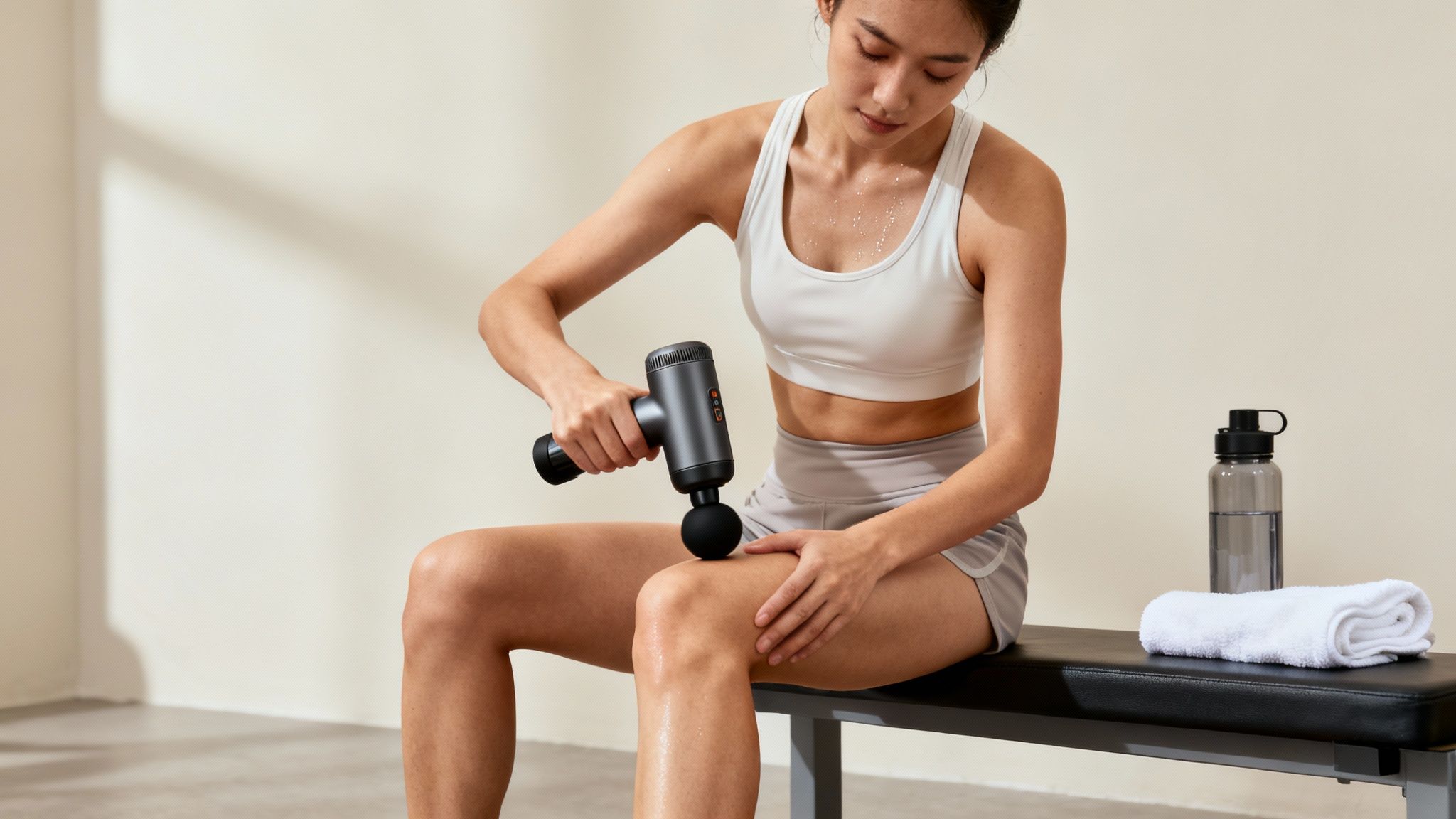
Ever feel stiff and tender a day or two after trying a new workout, going on a long hike, or even just helping a friend move furniture? That’s Delayed Onset Muscle Soreness, or DOMS. It’s not an injury—it’s actually a sign that your muscles are busy adapting and growing.
When you push your body, you create tiny, microscopic tears in your muscle fibers. Your body responds by sending fluid and nutrients to repair the damage, which leads to the inflammation and discomfort you feel 24 to 48 hours later. While this is totally normal, too much soreness can impact your range of motion and make simple tasks feel like a huge effort.
For a deeper dive into managing that post-workout pain, check out this guide on How to Reduce Muscle Soreness.
Your Immediate Action Plan
So, what should you do the moment that stiffness starts creeping in? The goal is to boost circulation without putting more stress on your already-tired muscles.
One of the best things you can do is some light activity. Don't just sit on the couch—get up and go for a gentle walk or a slow bike ride. This is called "active recovery," and it works wonders for helping flush out the metabolic waste that builds up in your muscles.
Another game-changer is targeted massage. This helps release tight knots, ease tension, and flood sore tissues with fresh, oxygenated blood. You can use your hands, a foam roller, or a percussion therapy device to zero in on specific spots like your quads, hamstrings, or shoulders. This direct approach offers incredible relief, helping you feel more mobile and way less stiff.
Top Recovery Methods at a Glance
To make it even simpler, here's a quick breakdown of some of the most effective recovery methods you can use. This table gives you the what, why, and when for each technique.
| Method | Primary Benefit | Best Time to Use |
|---|---|---|
| Active Recovery | Supports circulation and helps reduce stiffness | The day after an intense workout |
| Massage/Percussion | Helps release muscle knots and ease tension | Immediately post-workout or on rest days |
| Hydration | Helps flush metabolic waste from muscles | Before, during, and after exercise |
| Stretching | Promotes flexibility and relieves tightness | After a workout or as a cool-down |
Each of these plays a vital role in a well-rounded recovery plan. Mixing and matching them based on how you feel is the key to bouncing back faster and stronger.
Using Technology for Faster Muscle Relief
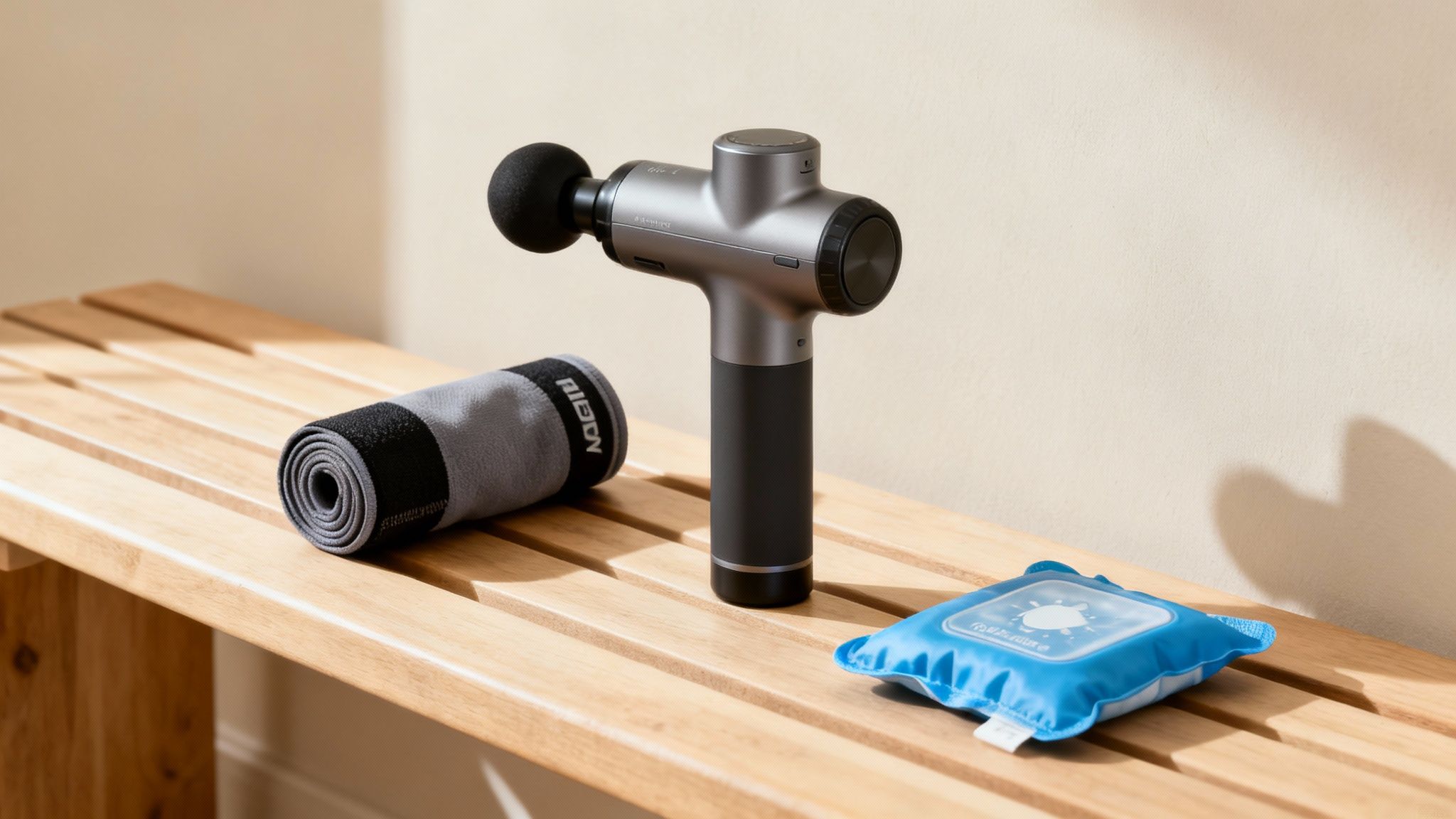
While basics like stretching and rest will always be important, modern tech gives us some seriously powerful tools to help our bodies bounce back faster. These devices are designed to supercharge your body's natural healing process, making it easier than ever to tackle soreness right at home.
The sports recovery tech space is booming. This is a clear sign that people everywhere are looking for smarter ways to deal with muscle pain and get faster muscle relief. The market was valued at around $3.1 billion in 2025 and is on track to nearly triple by 2030 as more of us discover just how effective these tools are.
Percussive Therapy: The Massage Gun Advantage
One of the best-known and most-loved tools is the percussive therapy device, or as everyone calls it, the massage gun. These handheld gadgets use rapid, pulsing motions to get deep into your muscle tissue.
This powerful action is called percussive therapy, and its main job is to boost blood flow to sore spots. Better circulation brings more oxygen and nutrients to tired muscles, which helps speed up repairs and clear out metabolic junk. It’s like a deep-tissue massage you can give yourself whenever and wherever you need it.
A quality device like the Cryotex Massage Gun delivers this relief with a quiet motor and comes with different attachments to target everything from your neck and shoulders down to your calves. You can learn more about exactly what a massage gun does in our detailed guide.
"I use my Cryotex after every long run. It's a game-changer for my hamstrings and calves. The next day, I feel refreshed instead of stiff." - A verified customer from Los Angeles.
Exploring Other Recovery Technologies
Massage guns are fantastic, but they're not the only players in the game. Other technologies can be a great addition to your recovery routine, and mixing and matching them can give you a more well-rounded approach to muscle care.
- Compression Wear: Think compression socks, sleeves, or leggings. These garments apply gentle, steady pressure to your limbs, which helps support circulation and can reduce swelling and that heavy-leg feeling after a hard workout.
- Cryotherapy and Cold Plunges: Hitting your body with extremely cold temperatures for a short time is a popular way to reduce inflammation and numb sore tissues. While you might not have a cryo-chamber at home, a cold shower or an ice bath can deliver similar benefits.
- Heat Therapy: For that chronic tightness and stiffness—not fresh, inflamed injuries—heat is incredibly soothing. A heating pad or a warm bath helps relax tense muscles and improves flexibility by increasing blood flow to the area.
Working these tools into your routine can make a huge difference in your downtime. Whether you’re an athlete pushing your limits or just dealing with stiffness from sitting at a desk all day, technology gives you accessible and effective ways to reduce muscle soreness.
The Power of Stretching for Soreness Prevention
When it comes to taking care of your muscles, sometimes the simplest tools are the most effective. A solid stretching and mobility routine is a core part of reducing soreness and keeping your body ready for whatever you throw at it.
Think of it as essential maintenance for your body, just like changing the oil in your car. By moving your joints through their full range of motion, you're boosting circulation, easing stiffness, and helping with soreness prevention before it turns into real pain.
Dynamic vs. Static Stretching: When to Use Each
Not all stretches are created equal, and timing is everything. Understanding the difference between dynamic and static stretching is the key to getting real results without wasting your time.
Dynamic stretching is all about active, controlled movements that warm up your joints and get the blood flowing. This is what you want to do before a workout to prep your body for action.
Dynamic Warm-Up Examples:
- Arm Circles: Gently swing your arms in big forward and backward circles for 30 seconds each way. This is perfect for waking up your shoulders, especially after sitting at a desk all day.
- Leg Swings: Hold onto a wall for a bit of balance, then swing one leg forward and back, then side to side. It’s a great way to open up your hips.
Static stretching, on the other hand, is what most of us picture when we hear the word "stretch." It’s where you hold a position for 20-30 seconds to lengthen a muscle. Save this for your cool-down, when your muscles are warm and much more receptive to a good stretch.
Simple Stretches for Common Trouble Spots
You don't need a complicated, hour-long yoga session to feel better. Just focusing on a few key areas that get tight can make a huge difference in your daily comfort.
If you're dealing with stubborn calf tightness, for instance, our guide on how to treat tight calf muscles has some targeted techniques that really work.
Here are three of our go-to static stretches for a post-workout or end-of-day routine:
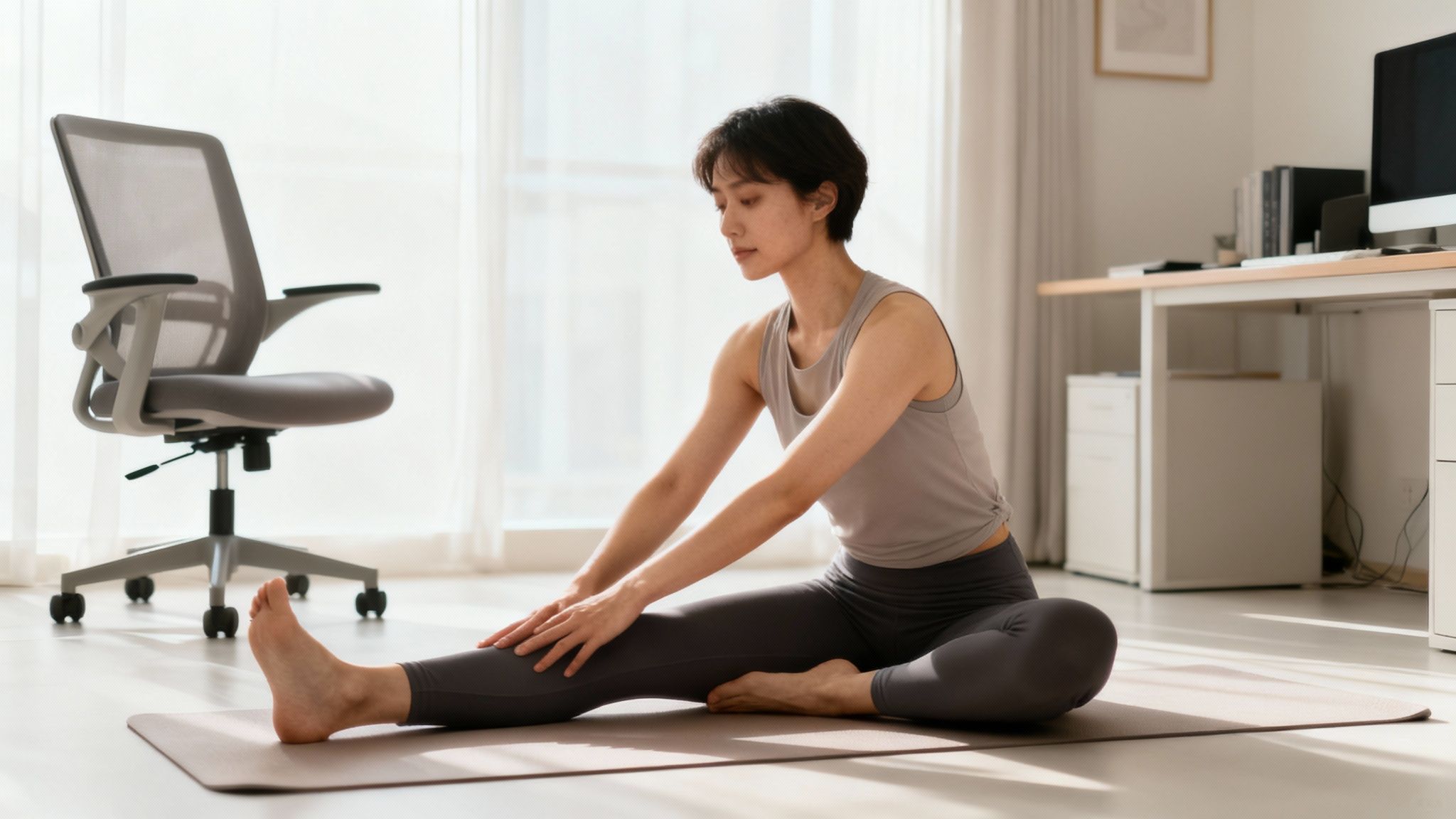
- Hamstring Stretch: Sit on the floor with one leg straight out and the other bent. Hinge forward from your hips toward the extended foot until you feel a gentle pull. Hold it, then switch.
- Low Back Stretch (Knee-to-Chest): Lie on your back and pull both knees into your chest, giving them a good hug. You can even rock gently side-to-side for a mini massage on your lower back.
- Shoulder & Chest Stretch: Find a doorway and place your forearms on the frame, with your elbows just below shoulder height. Step forward until you feel a nice stretch across your chest and the front of your shoulders.
Learning how to improve flexibility is a game-changer for minimizing soreness. Making these simple moves a regular habit is one of the most powerful things you can do for a more comfortable, mobile life.
Fueling Your Body for Optimal Recovery
What you eat and drink after a tough workout has a massive impact on how your body bounces back. Think of it this way: your muscles are like a construction site, and nutrition provides all the raw materials needed for repairs.
Without the right fuel, your body can’t rebuild efficiently. This often means you’ll feel sore and achy for days. The good news? You don't need a complicated diet. Just a few smart choices can make all the difference in your muscle repair process.
The Power Trio: Protein, Carbs, and Fats
When it comes to rebuilding muscle and refueling your energy, three key players do all the heavy lifting: protein, carbohydrates, and healthy fats. Each one has a specific job.
- Protein is the builder. It’s the most important nutrient for repairing the tiny micro-tears that exercise creates in your muscle fibers. Think lean chicken, fish, eggs, and Greek yogurt—these provide the amino acids your body needs to patch things up and grow stronger.
- Carbohydrates are the refueler. Your muscles run on stored energy called glycogen. A good workout drains those stores, and carbs are what fill the tank back up. Sweet potatoes, oats, quinoa, and fruit are all excellent choices.
- Healthy fats are the supporter. These help manage inflammation and keep your joints and cells happy. Avocados, nuts, seeds, and a drizzle of olive oil are great ways to get them in.
This isn’t new science. Researchers have known for decades how critical these nutrients are. A 2006 study, for example, showed how certain amino acids could significantly reduce muscle damage and soreness when taken after exercise. Discover more insights about the role of nutrition in recovery on ncbi.nlm.nih.gov.
Eat to Fight Inflammation
Did you know some foods are natural inflammation fighters? Adding them to your meals is a simple way to help calm the irritation that causes DOMS (delayed onset muscle soreness).
Here are a few anti-inflammatory powerhouses to add to your grocery list:
- Fatty Fish: Salmon and tuna are packed with omega-3 fatty acids, famous for their ability to cool down inflammation.
- Berries and Tart Cherries: These fruits are loaded with antioxidants that help fight the cellular stress caused by a hard workout.
- Leafy Greens: Spinach, kale, and other greens deliver a powerful punch of vitamins and minerals that support the entire recovery process.
"I started making a post-workout smoothie with spinach, a banana, and protein powder, and it’s made a noticeable difference. I feel less achy the next morning." - A verified customer from New York.
Don’t Forget to Hydrate
Never, ever underestimate the power of H2O. Your muscles are about 75% water, and staying hydrated is absolutely essential for helping flush out the metabolic junk that builds up during exercise.
Being even slightly dehydrated can make soreness feel worse and drag out your recovery time. A good rule of thumb is to drink plenty of water before, during, and after you move.
Want to be more precise? Weigh yourself before and after your workout. For every pound of sweat you’ve lost, aim to drink 16-24 ounces of fluid to get back to baseline.
By making a few simple tweaks to what you eat and drink, you give your body the tools it needs to recover faster and feel stronger. For more ways to take care of your body, explore our full range of percussive therapy devices.
Complementary Therapies for Total Muscle Care
While massage guns, stretching, and nutrition are your core recovery powerhouses, a few extra therapies can really take your muscle care to the next level.
Think of these as the specialists in your recovery toolkit. They’re simple, effective, and perfect for building a complete self-care routine that addresses both acute soreness from a workout and chronic tightness from everyday life.
Foam Rolling, Hot/Cold Therapy, and Compression
One of the most popular and accessible methods is foam rolling. It’s like having your own personal massage therapist on call. By slowly rolling over tight spots, you apply targeted pressure that helps break up muscle knots and release stubborn tension. This self-myofascial release promotes blood flow and helps restore mobility, especially in those big muscle groups.
Another powerhouse is contrast water therapy—the simple act of alternating between hot and cold water. A hot shower or bath is great for relaxing tight muscles by boosting blood flow. Follow that with a quick blast of cold water to help bring down inflammation. This rapid temperature change creates a "pumping" action in your blood vessels, helping to flush out metabolic waste.
Then there's compression therapy, a tried-and-true method for improving circulation and reducing that heavy, swollen feeling. Using compression gear like socks or sleeves applies gentle, consistent pressure to your limbs. This helps push blood back toward the heart, making your legs feel lighter and less achy after a long day.
The global market for compression recovery systems was valued at around USD 1.32 billion in 2024 and is expected to keep growing. That just shows how many people are relying on this method to feel better, faster. You can read the full research about compression recovery systems on businessresearchinsights.com.
Choosing Your Complementary Recovery Therapy
So, which therapy should you use and when? It all depends on how your body is feeling and what it needs most.
This simple decision tree below helps you visualize whether you need to prioritize refueling with protein for muscle repair or focusing on hydration to flush out toxins.
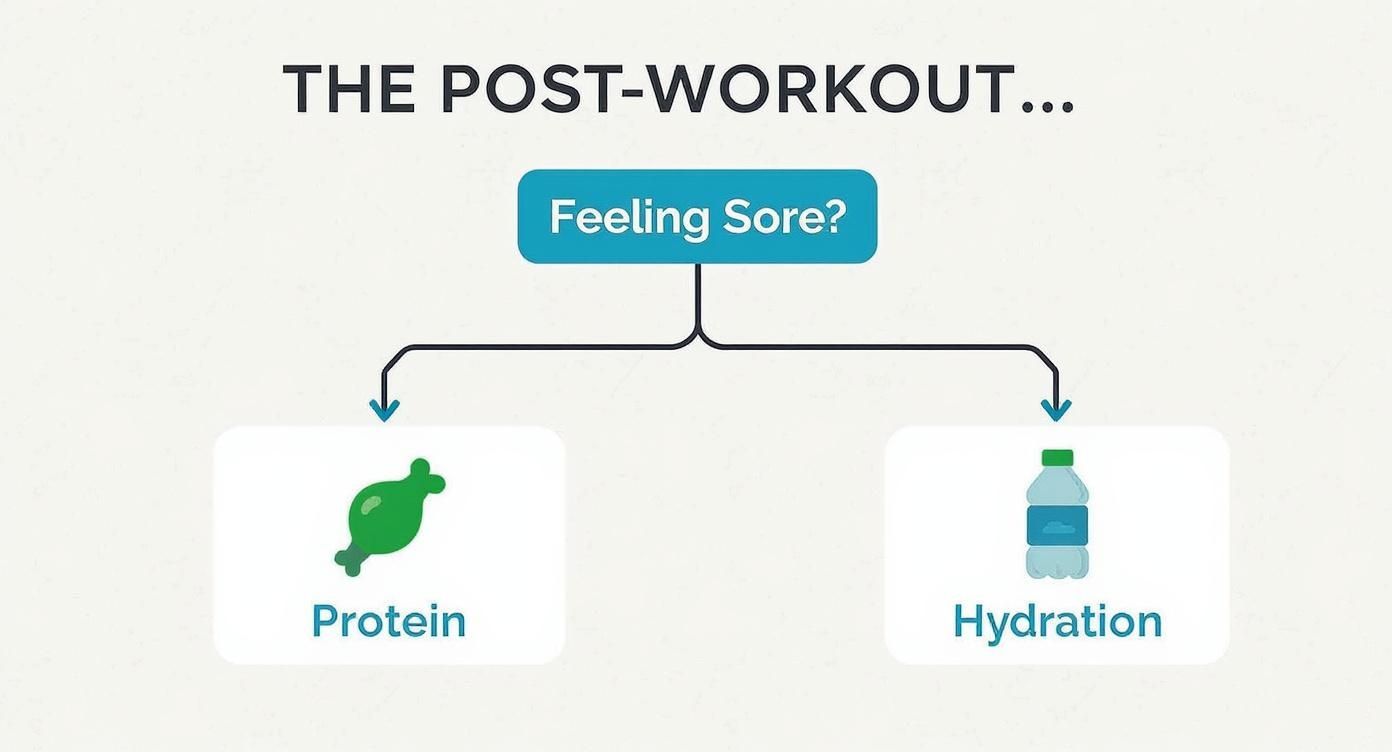
It's a great reminder that while protein is crucial for rebuilding when you're sore, hydration is the foundation for all recovery.
To help you build the perfect recovery strategy, here’s a quick comparison of the complementary therapies we just covered.
| Therapy Type | Best For | Key Benefit | Considerations |
|---|---|---|---|
| Foam Rolling | Releasing specific muscle knots and tightness | Targeted deep-tissue self-massage | Can be uncomfortable on very sore spots |
| Contrast Water | General soreness and reducing inflammation | Boosts circulation and flushes muscles | Requires access to hot and cold water |
| Compression | Swelling and heavy-feeling limbs | Supports blood flow and reduces swelling | Best worn for a set period post-activity |
For anyone curious about diving deeper into advanced compression tech, you might want to check out our guide on how Hyperice compression boots work to supercharge circulation and recovery.
Combining these therapies gives you a well-rounded approach to staying mobile, comfortable, and ready for whatever challenge comes next.
Common Questions About Muscle Soreness
As you get deeper into your fitness journey, you start to learn the language your body speaks. That twinge in your quad, the stiffness in your back—these are all signals. Learning how to read them is the key to recovering smarter.
Let's dive into some of the most common questions we hear about muscle soreness, so you can handle your recovery like a pro.
How Do I Know If It's Soreness or an Injury?
This is the big one, and it's crucial to get it right. That familiar post-workout ache is Delayed Onset Muscle Soreness, or DOMS. It typically feels like a dull, spread-out tenderness that peaks 24 to 48 hours after you've pushed yourself. A little light movement often makes it feel a bit better.
An injury, on the other hand, usually feels different. It’s often a sharp, specific pain that hits you during an activity. You might also see swelling, bruising, or find you can't move the area like you normally would. Trying to use that muscle will almost always make it feel worse.
Here's the golden rule: If the pain is sharp, sudden, or isn't getting better after a couple of days of taking it easy, it's time to see a healthcare professional. Never try to "push through" a potential injury.
Is It Okay to Work Out When I'm Sore?
It really depends on how sore you are. If you're feeling a bit stiff but can move around okay, some "active recovery" is actually one of the best things you can do. Think a gentle walk, a slow spin on a stationary bike, or a few easy laps in the pool. This gets your blood flowing, which helps clear out metabolic waste and deliver fresh nutrients.
But if you're so sore that simple movements are a struggle, your body is sending you a very clear message: rest. Hammering an exhausted muscle group doesn't build strength; it just opens the door to injury. On those days, give that part of your body a break and maybe focus on something else entirely. Your body knows what it needs—you just have to listen.
How Often Should I Use a Massage Gun for Soreness?
A massage gun is a game-changer for soreness, but more isn't always better. For post-workout recovery, a quick 1-2 minutes on each major muscle group is all you need. Stick to the bigger, fleshier parts of the muscle—your quads, glutes, hamstrings, and calves are perfect targets.
You can use your Cryotex massage gun right after a workout to help head off stiffness, or on rest days to break up any knots that have settled in. A quick 30-second pass over your muscles before you train is also a fantastic way to wake them up.
Just be sure to keep these simple safety tips in mind:
- Avoid Bones and Joints: Never press the massage gun directly onto your spine, kneecaps, elbows, or other bony spots.
- Don't Use on Injuries: If you think you've pulled or torn something, a massage gun is not the right tool for the job. See a professional.
- Listen to Your Body: If you feel any sharp pain, back off or stop. The goal is relief, not more discomfort.
Following these guidelines will help you get the most out of your massage gun safely and effectively. For more expert recovery advice, you can explore our full collection of articles.
At BestMassageGun.com, we believe that feeling your best shouldn't be complicated. Our tools are designed to fit seamlessly into your life, offering powerful relief whenever you need it.
