

Posted by Jonathan Atan
on December 03, 2025

If you're dealing with that tight, band-like pressure around your head, you're not alone. The good news is, you can find effective relief without just powering through the pain. Learning how to relieve tension headaches naturally often starts with addressing the root cause—usually tight, overworked muscles in your neck, shoulders, and upper back.
With a few simple techniques like self-massage, gentle stretches, and smart lifestyle habits, you can support your body's ability to ease discomfort and prevent future headaches.
Understanding Tension Headaches and Natural Relief
That familiar, squeezing pain around your forehead is your body's way of signaling that it's holding onto too much strain. This can come from stress, poor posture after a long day at the desk, or even just not drinking enough water.
While it's easy to reach for a pain reliever, understanding why a headache is happening empowers you to use natural, sustainable methods for lasting comfort. These simple adjustments can help you feel better and reduce how often headaches show up.
Quick Guide to Natural Headache Relief Methods
Here’s a quick overview of the natural techniques we'll cover to help you find relief from tension headache pain.
| Technique | How It Helps | Best For |
|---|---|---|
| Self-Massage | Helps release knots and trigger points in the neck and shoulders. | Immediate relief from pain caused by muscle tightness. |
| Stretching | Lengthens tight neck and shoulder muscles, promoting flexibility. | Preventing headaches caused by poor posture and stiffness. |
| Posture Correction | Helps reduce strain on the neck and upper back muscles. | Long-term prevention for desk workers or anyone who sits a lot. |
| Hydration | Supports muscle function and helps prevent dehydration, a common trigger. | Quick relief if you suspect you haven't had enough water. |
| Stress Management | Promotes relaxation in the jaw, neck, and shoulders. | Preventing stress-induced headaches before they start. |
Each of these plays a crucial role. Combining them is the key to building a powerful wellness routine that supports your body against tension headaches.
Common Triggers You Can Control
Many tension headaches are sparked by everyday habits you have complete control over. Spotting these triggers is your first line of defense.
The main culprits usually fall into one of these categories:
- Chronic Muscle Tension: This is a big one. Sitting for hours, especially hunched over a screen, causes the muscles in your neck and shoulders to tighten up, creating knots that can contribute to head pain.
- Persistent Stress: When you’re stressed, your body physically tenses. You might clench your jaw or hunch your shoulders without realizing it. That constant contraction is a direct line to a headache.
- Dehydration and Nutrition: It sounds simple, but not drinking enough water is one of the fastest ways to trigger a headache. Skipping meals can also be a common cause.
- Lack of Quality Sleep: Sleep is when your body repairs itself. If you're not getting enough deep, restorative rest, your muscles may not get a chance to fully relax, leaving you more vulnerable to tension.
"I used to get headaches every afternoon at my desk. I started setting a timer to stretch my neck for 60 seconds every hour, and it’s made a huge difference. It’s the small habits that really add up." - Jessica L., Chicago, IL
By focusing on these areas, you can start building a powerful defense against tension headaches. Simple adjustments to your daily routine can make a world of difference.
For instance, tackling tight muscles in your upper body is a great place to start. If you’re dealing with persistent neck soreness that contributes to your headaches, exploring the best massage gun for neck pain can offer targeted, powerful relief right where you need it.
In the next sections, we'll dive into specific, actionable techniques you can use right now to release that tension and start feeling better.
Using Self-Massage for Immediate Relief
When a tension headache clamps down, a targeted massage can be a game-changer. The source of that nagging pain is often tight knots, or trigger points, hiding in the muscles of your neck and shoulders. Learning how to find and release these spots yourself is an incredibly powerful tool for finding fast relief.
The best part? You don't need any fancy equipment to get started. Just using your fingertips to apply steady, gentle pressure to sore areas can work wonders. This simple action helps interrupt pain signals and encourages those wound-up muscle fibers to relax.
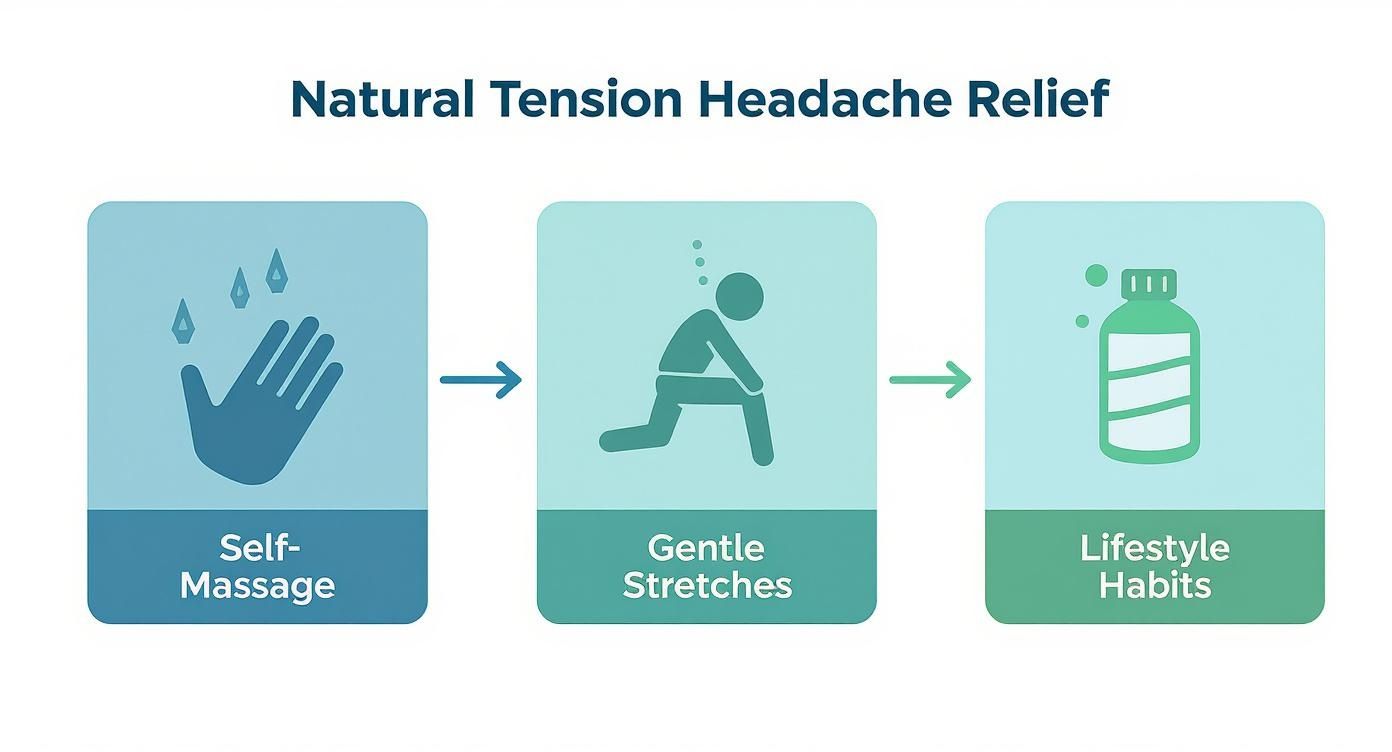
As you can see, combining a few different approaches is usually the most effective way to get both immediate comfort and long-term prevention.
Finding and Releasing Trigger Points
Trigger points are those tender spots in your muscles that can refer pain elsewhere—in this case, right to your head. The usual suspects for tension headaches are the trapezius muscles (the big ones covering your neck, shoulders, and upper back) and the tiny suboccipital muscles at the very base of your skull.
To find them, gently feel around the muscles along your shoulders and the back of your neck. When you find a spot that’s sore or feels like a tight little knot, apply firm but gentle pressure and hold it for 30 to 60 seconds. You should feel the tension slowly begin to dissolve. Remember to breathe deeply—it helps your muscles relax even more.
Quick Tip: Listen to your body. You're looking for a "good hurt," the kind that signals a release of tension, not sharp or intense pain. If it hurts too much, ease off.
For a deeper dive into techniques, check out our full guide on self-massage for headaches for more tips on hitting those tricky spots.
Elevating Relief with a Massage Gun
While your fingers are great, sometimes you need a little more power to work through stubborn knots. This is where a percussive massager can be a total game-changer. A device like the Cryotex massage gun uses rapid pulses to reach deep into the muscle, which helps support circulation and release deep-seated tension your hands just can't reach.
Just remember, using a massage gun on your neck and shoulders requires a gentle touch and the right technique.
- Pick the Right Attachment: Start with a soft, cushioned head. The large round foam ball is perfect because it distributes the pressure and is less intense than harder plastic heads.
- Start Low and Slow: Always begin on the lowest speed setting to see how your muscles react. You can increase the speed if needed, but for the delicate neck and shoulder area, less is usually more.
- Stick to Fleshy Areas: Glide the massage gun over your trapezius muscles—from the base of your neck out toward your shoulders. You can also carefully work it over the suboccipital muscles at the base of your skull.
- Avoid Bone and Sensitive Areas: This is critical for safety. Never use a massage gun directly on your spine, the front or sides of your neck, or on your head or face.
Using a massage gun this way for just a few minutes can feel as good as a professional massage, helping you stop a tension headache in its tracks.
Gentle Stretches to Release Neck and Shoulder Tension
Let’s be honest—we all spend too much time hunched over a desk or phone. That constant forward lean shortens the muscles in your chest and neck while straining the ones in your upper back. This imbalance is a common contributor to that familiar, squeezing head pain.
The good news? You can fight back with simple, practical moves you can do right at your desk. These stretches help release built-up tightness and nudge your body back into a healthier posture.

Simple Stretches You Can Do Anywhere
When it comes to stretching, consistency is more important than intensity. Just a few minutes of these gentle movements scattered throughout your day can stop muscle tension from building into a full-blown headache.
- Chin Tucks: Sit up straight and look forward. Gently guide your chin toward your chest, like you're trying to make a double chin. You should feel a light stretch at the base of your skull and down the back of your neck. Hold for five seconds, release, and aim for 5-10 reps.
- Lateral Neck Bends: Sitting tall, slowly tilt your right ear toward your right shoulder. Stop when you feel a gentle stretch along the left side of your neck. Hold for 15-20 seconds, then return to the center and repeat on the other side. Keep your shoulders down and relaxed—don't let them creep up toward your ears!
- Upper Trapezius Stretch: Rest your right hand on the left side of your head. Let the weight of your arm gently guide your head toward your right shoulder. To deepen the stretch, you can tuck your left hand behind your back. Hold for 20 seconds, then switch.
“I keep a sticky note on my monitor that just says ‘STRETCH.’ Every time I see it, I do a few neck rolls and chin tucks. It’s a tiny habit, but my afternoon headaches have almost completely disappeared.” - David R., New York, NY
Why Stretching Is a Cornerstone of Natural Relief
Stretching is more than just a feel-good activity—it’s a powerful tool for managing headaches naturally. Lifestyle and behavioral adjustments, especially regular stretching of the neck and shoulder muscles, have been shown to be incredibly effective with minimal risks.
In fact, research suggests that these kinds of practices can help reduce headache frequency by targeting the root musculoskeletal triggers. If you want to dive deeper, you can explore more insights on tension-type headache awareness from the International Headache Society.
By weaving these simple movements into your daily routine, you’re not just addressing pain—you’re preventing it. You’re actively releasing tension before it builds up, retraining your muscles to relax, and building a more resilient posture.
Building Habits for Long-Term Prevention
Getting rid of a tension headache right now is great, but stopping them before they even start is the real goal. You don’t need a massive life overhaul—just a few small, smart habits can make a huge difference over time.
Think of it this way: according to the World Health Organization, headache disorders affect a significant portion of the global population. Building a solid prevention routine is a practical way to improve your quality of life.
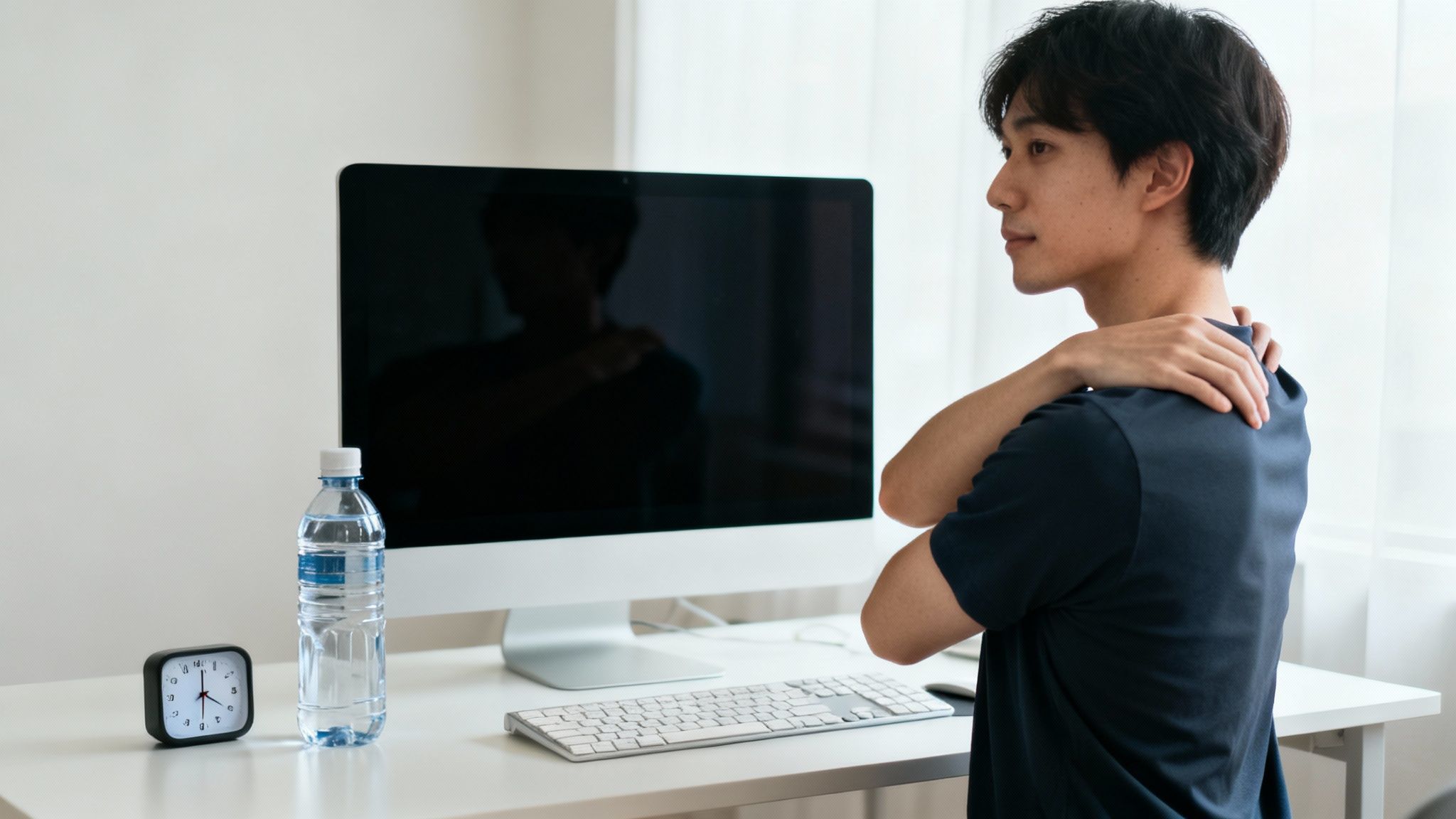
Optimize Your Workspace Ergonomics
Your desk setup could be a secret villain behind your headaches. If your monitor is too low or your chair has poor back support, you’re forcing your neck and shoulder muscles into awkward positions for hours. That’s a recipe for chronic tension.
A few simple tweaks can bring massive relief.
- Fix Your Monitor Height: The top of your screen should be at or just below eye level. This stops you from craning your neck down, which puts strain on the muscles at the base of your skull.
- Support Your Lower Back: A chair with good lumbar support is ideal, but even a small pillow can work wonders. It helps you maintain the natural curve in your spine and stops you from slouching.
- Keep Your Feet on the Floor: Your feet should rest flat on the floor with your knees at a comfortable angle. This simple thing helps stabilize your entire posture.
"I used to think ergonomics was just a buzzword. After raising my monitor just a few inches, the constant ache at the base of my skull vanished within a week. It's a small change with a massive payoff." - Michael P., Los Angeles, CA
Stay Hydrated to Keep Muscles Happy
It sounds almost too simple, but dehydration is one of the most common—and easily fixable—headache triggers. When you're low on water, your muscle tissue becomes less flexible and is more prone to cramping and tightness, including the muscles in your neck and shoulders.
Dehydration can also slightly reduce blood and oxygen flow to the brain, which can be a direct trigger for pain. Making hydration a non-negotiable part of your day is a simple but powerful defensive move. Keep a reusable water bottle on your desk as a visual reminder to sip throughout the day.
Embrace Frequent Movement Breaks
Sitting still for hours is one of the worst things for muscle tension. Your body was made to move. When you stay in one position, your muscles get stiff and circulation can slow down, creating the perfect conditions for a tension headache.
The secret is short, frequent "movement snacks." Set a timer to go off once an hour, and just get up for 60 seconds. Stand up, stretch your arms overhead, roll your shoulders, or just walk to the kitchen and back. These mini-breaks are all it takes to keep your muscles loose and blood flowing. For more ideas, you can explore other ways to improve blood circulation naturally, which also helps keep headaches away.
Simple Ways to Manage Daily Stress
Let's be honest: stress is a massive trigger for tension headaches. It’s not just a feeling; it’s a physical reaction. When you’re stressed, your body tenses up—you might clench your jaw, your shoulders might creep toward your ears, and your neck muscles tighten without you even realizing it.
This section is all about breaking that cycle with simple, practical techniques to manage your body’s response to whatever life throws at you.
The goal isn’t to eliminate all stress (if only it were that easy!). Instead, it’s about giving you the tools to handle its physical side effects. By calming your body's "fight or flight" response, you can stop pent-up tension from escalating into a full-blown headache.
Master Your Breath to Calm Your Nerves
One of the quickest ways to signal to your nervous system that it's okay to relax is by controlling your breath. When we're stressed, our breathing often becomes short and shallow, keeping our muscles on high alert. Slowing it down can offer almost instant relief.
Try the 4-7-8 breathing method. You can do it anywhere, even at your desk.
- Breathe in quietly through your nose for a count of four.
- Hold your breath for a count of seven.
- Exhale completely through your mouth (making a "whoosh" sound) for a count of eight.
Repeat this cycle three or four times. It takes less than a minute but does wonders for promoting a sense of calm and convincing tight muscles to let go.
Create Moments of Mindful Relaxation
Beyond breathing, sprinkling small, mindful moments throughout your day can make a world of difference. This is all about consciously doing things that soothe your senses and help melt away physical tension.
You don't need to carve out an hour for meditation. Just try one of these simple resets:
- Take a Warm Bath or Shower: Heat is incredible for relaxing the tight muscles in your shoulders and neck—often the very source of a tension headache.
- Listen to Calming Music: A playlist of instrumental tunes or nature sounds can help lower stress hormones and bring you to a more peaceful state.
- Reduce Sensory Overload: Dim the lights. Step away from your screens for just five minutes. We spend so much time staring at devices, and it’s critical to acknowledge how that contributes to headaches; you can learn more about understanding and finding relief from digital eye strain.
"I started taking a 10-minute break with a warm compress on my neck and shoulders when I feel a headache coming on. It’s like hitting a reset button for my muscles. It's so much better than just trying to push through the pain." - Sarah K., Austin, TX
By weaving these small habits into your routine, you’re not just reacting to a headache. You’re building a more resilient system that's less likely to create one in the first place.
Your Questions on Natural Headache Relief, Answered
Diving into natural remedies can bring up a lot of questions. If you’re wondering how to get the best results or just want to make sure you’re doing things safely, you’re in the right place. Here are practical answers to some of the most common questions we hear.
How quickly can I expect relief?
The answer depends on the technique. Some methods offer almost immediate relief, while others are about long-term prevention.
- For Fast Relief (Minutes): If you need comfort right now, try some self-massage on your neck and shoulders or use your Cryotex massage gun on the lowest setting. You can feel the muscles start to release in just a few minutes. A warm compress draped over your shoulders also works wonders for quickly easing that tight, constricted feeling.
- For Long-Term Prevention (Weeks to Months): Consistent habits are where the real magic happens. Fixing your posture, drinking enough water, and taking stretch breaks address the root cause of tension. Stick with them, and over a few weeks, you'll likely notice you’re reaching for relief far less often.
Is it safe to use a massage gun near my head?
This is a critical safety question, and the answer is a firm no. Never use a massage gun directly on your head, face, or the front and sides of your neck. These areas contain sensitive nerves and arteries, and the power of a percussion massager is too intense for them.
The massage gun is for the muscles causing the headache, not the head itself. The real culprits are almost always the dense muscles in your upper back, shoulders (your traps), and at the base of your skull. Targeting these spots can provide relief without the risk.
What is the single most important habit for prevention?
If we had to pick just one, it’s consistency. The best habit is the one you’ll actually stick with every day. Don't try to overhaul your entire life at once. Pick one small, manageable thing and master it.
Here are a couple of real-world examples:
- Struggling with hydration? The moment you wake up, fill a large water bottle and place it on your desk. Make it a goal to finish it before the end of your workday.
- Stuck at a desk all day? Set a recurring timer on your phone or computer to go off every hour. When it does, stand up and do one 60-second neck stretch. That’s it.
Once that one thing feels automatic, you can add another. Small, consistent efforts build up over time to create powerful, lasting change.
When should I see a doctor for my headaches?
While these natural methods are fantastic for common tension headaches, they are not a substitute for professional medical advice. It’s important to listen to your body and know when to consult a doctor.
Please see a healthcare provider if you experience any of the following:
- Your headaches become suddenly more severe or frequent.
- The type of pain feels different from your usual headache.
- The headache is accompanied by other symptoms like fever, a stiff neck, confusion, vision changes, or numbness.
- The headaches began immediately following a head injury.
Taking care of yourself includes knowing when to ask for help. Don't hesitate to reach out to a professional if something feels off.
At BestMassageGun.com, our mission is to provide the tools and knowledge to help you take control of your wellness and recovery. We want to help you find relief that lasts, so you can get back to living your life with less pain.
