

Posted by Jonathan Atan
on November 28, 2025

Ever finish a workout feeling amazing, only to wake up with a new ache that just won't quit? You're not alone. Staying active is key to a healthy life, but nothing sidelines your goals faster than an unexpected injury.
The secret to long-term fitness isn't just about pushing harder—it's about training smarter. This guide will show you exactly how to prevent sports injuries, turning prevention from a chore into your greatest athletic advantage.
Why Injury Prevention Is Your Smartest Strategy

Whether you’re a weekend warrior or a seasoned pro, a proactive approach is always better than a reactive one. It saves you from the frustration of missed workouts and long recovery periods.
Think of injury prevention as your personal playbook for staying healthy and consistent. It’s not about avoiding activity; it’s about preparing your body to handle stress with smart preparation and effective recovery.
The Real Cost of Skipping Prevention
Ignoring the fundamentals is a shortcut to common issues. Overuse injuries make up a significant portion of all sports-related problems, often because we push too hard, too fast. For those looking to avoid common issues, this practical guide to preventing ACL injuries is a great starting point.
By understanding why prevention works, you can build a more resilient body. The benefits are huge:
- Better Performance: A body that isn't battling minor aches has more energy to perform at its best.
- Serious Consistency: Staying healthy means you can stick to your training schedule for real, long-term results.
- Lifelong Activity: Smart habits allow you to enjoy your favorite activities for years to come.
"I used to get nagging shoulder pain from my desk job, which made my workouts tough. Learning to warm up properly changed everything for me. It’s simple but it works." - Mark S., Austin, TX
Just as important as prevention is recovery. You can get started with our comprehensive guide on essential muscle recovery techniques. In the sections ahead, we’ll dive into the actionable steps that form a powerful defense against injury.
Build a Resilient Body with Strength and Mobility
A body that resists injury is both strong and flexible. This isn’t just about lifting heavy weights—it comes from a smart blend of targeted strength work and active mobility.
Think of strength training as building armor for your joints and muscles. When your muscles are strong, they absorb impact and stabilize your body, taking stress off ligaments and tendons.
For example, strong glutes and hamstrings create a powerful support system for your knees and hips. In the same way, a strong core acts like a natural brace for your spine, which is vital for everything from lifting groceries to playing sports.
The Power of Mobility and Flexibility
While strength gives you stability, mobility gives you the freedom to move correctly. Mobility is your ability to actively move a joint through its full range of motion. When you lack mobility, other parts of your body compensate, which is a classic recipe for injury.
Structured programs that combine strength and flexibility are incredibly effective. Research shows that comprehensive conditioning routines can reduce lower limb injuries in athletes by 30-50%. (Discover more sports medicine insights on Market.us).
Key takeaway: Holding long, static stretches before a workout is a common mistake. It can reduce muscle power. Always save those for your cool-down.
Your Guide to Effective Stretching Techniques
Understanding when and how to perform different types of stretches is crucial for preventing sports injuries. This table breaks down the most common methods and their benefits.
| Stretching Type | Description | Best Time to Use | Primary Benefit |
|---|---|---|---|
| Dynamic | Active, controlled movements that take your body through a full range of motion (e.g., leg swings, arm circles). | Pre-Workout | Warms up muscles, increases blood flow, and gets your body ready for activity. |
| Static | Holding a stretch in a fixed position for an extended period (typically 15-30 seconds). | Post-Workout | Lengthens tight muscles, supports flexibility, and promotes recovery. |
For those deep, stubborn knots that simple stretching can't fix, a different approach might be needed. You can learn more about myofascial release therapy in our detailed guide.
Master Your Warm-Up and Cool-Down Routines
Jumping straight into a high-intensity workout without prep is one of the fastest ways to get sidelined. An effective warm-up isn't just a suggestion—it's non-negotiable for anyone serious about staying in the game.
The key is to think dynamic, not static. A proper warm-up uses active movements to get your body ready for the specific demands of your workout. This simple shift makes a massive difference in both performance and safety.
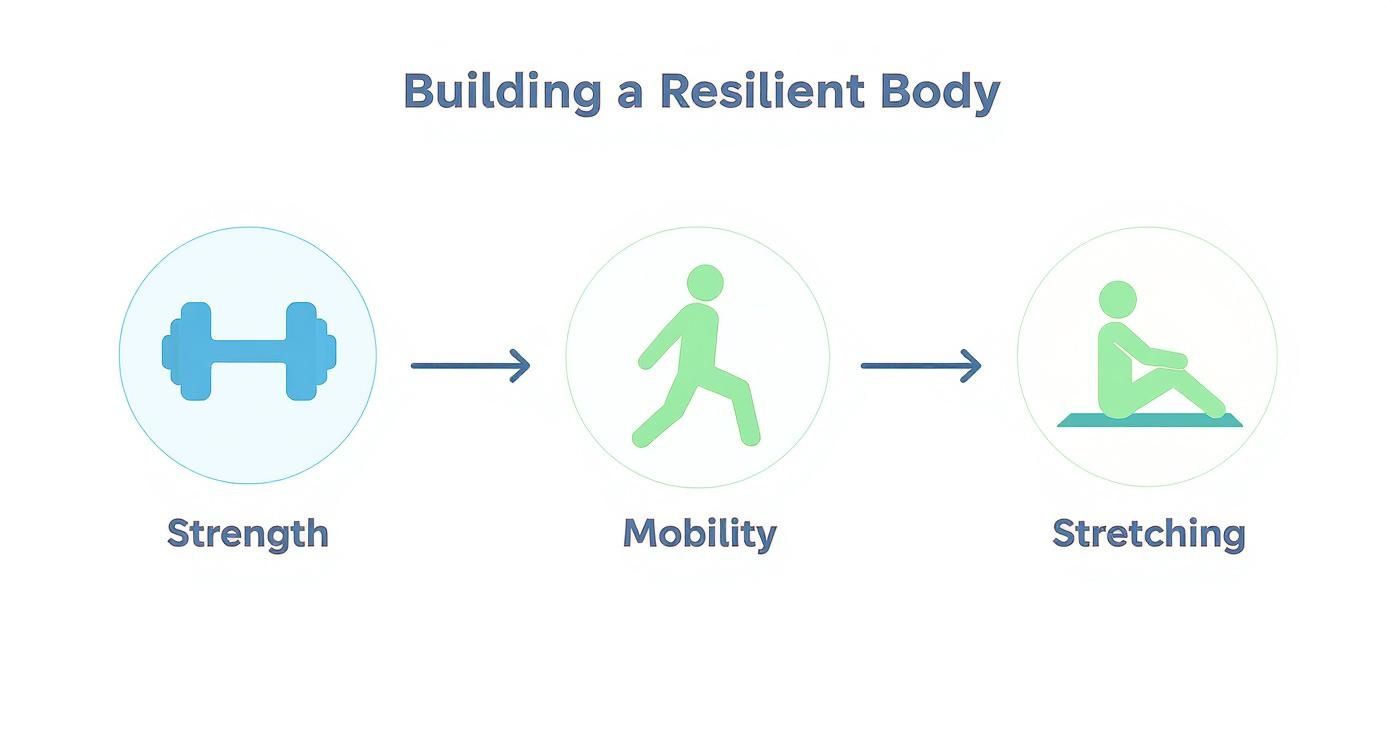
As you can see, it's the combination of strength, mobility, and smart stretching that creates a durable, injury-resistant body.
How to Build an Effective Warm-Up
A great warm-up gradually gets your heart rate up and sends blood flowing to your muscles, making them more pliable. All you need is 5-10 minutes.
Here’s a simple framework:
- Light Cardio: Start with 2-3 minutes of jogging in place or jumping jacks to raise your body temperature.
- Dynamic Stretches: Focus on movements that mimic your workout. For runners, think leg swings and hip circles. For lifters, try light band work and bodyweight squats.
- Activation Drills: Wake up your key stabilizing muscles. Glute bridges are great for firing up your hips before squats or runs.
Don't Skip the Cool-Down
Once the hard work is done, your cool-down is the first step toward recovery. It helps bring your heart rate back to normal safely and can prevent that post-workout light-headed feeling.
This is also the perfect time to bring in tools designed to promote recovery. Using a device like the Cryotex massage gun for just a few minutes can make a world of difference. Its percussive therapy helps support circulation to tired muscles and can reduce post-workout soreness.
Focus the massage gun on the major muscle groups you just trained. This simple ritual makes your recovery more efficient and sets you up to feel refreshed for your next session. Of course, knowing the best times to use a massage gun helps you get the most out of your routine.
Train Smarter by Listening to Your Body
One of the biggest myths in fitness is that "more is always better." True progress happens when you learn to recognize when to push hard and when to pull back.
Training smart means embracing progressive overload without doing too much, too soon. The idea is simple: to get stronger, you have to gradually increase the demands on your body. But “gradual” is the magic word here.
A safer and more effective approach is to increase your total training load by no more than 10% per week. This small, steady increase gives your body time to adapt and get stronger, all while keeping your injury risk low.
Distinguishing Good Soreness from Bad Pain
Learning to listen to your body is a skill. You have to know the difference between productive muscle soreness and the sharp pain that’s a clear warning sign.
- Muscle Soreness (DOMS): This is that familiar, dull ache that shows up 24-48 hours after a solid workout. It feels spread out across the muscle and fades in a few days. This is a normal part of the muscle-building process.
- Injury Pain: This is different. It’s often sharp, sudden, and focused on a specific spot. It might get worse when you move or stick around for days. This is your body’s alarm bell telling you to stop.
Pushing through true pain is never a badge of honor. A wise athlete knows that taking a day or two off is smarter than being forced to sit on the sidelines for a month.
The Critical Role of Rest and Recovery
You don’t get stronger during your workouts. You get stronger after them, during recovery.
This is why planned rest days are non-negotiable for anyone serious about how to prevent sports injuries. Rest gives your body and nervous system a chance to fully repair. It’s often the key to breaking through plateaus without breaking down.
Today, many pros rely on data to make these calls. Wearable tech gives them real-time feedback on everything from heart rate to muscle fatigue. Data-driven strategies have been shown to help reduce re-injury rates. (Discover more trends in sports technology at Catapult.com).
Optimize Your Recovery for Better Performance
Your real fitness gains don't happen when you're pushing your limits. They happen during recovery, when your body rebuilds itself stronger. This boils down to three pillars: sleep, nutrition, and active recovery.
It always starts with sleep. Getting 7-9 hours of quality sleep is non-negotiable for muscle repair. While you’re resting, your body is busy repairing micro-tears in your muscles.
Next up is nutrition. Protein gives your body the building blocks to rebuild muscle, and carbs are essential for restocking the energy you just burned through.
Taking Recovery Into Your Own Hands
Beyond sleeping and eating right, active recovery is where you can really make a difference. This means using specific tools and techniques to help your body bounce back faster.
Gentle movement on rest days, like a walk or light stretching, is great for supporting blood flow. For more focused relief, many people use self-myofascial release. Techniques like lacrosse ball massage techniques are great for digging into smaller, hard-to-reach knots.
If you do get injured, don't wait around. Research suggests that getting prompt physiotherapy for common sprains and strains can make a massive difference. (Learn more about the benefits of early physiotherapy intervention from this study).
Using a Massage Gun for Effective Recovery
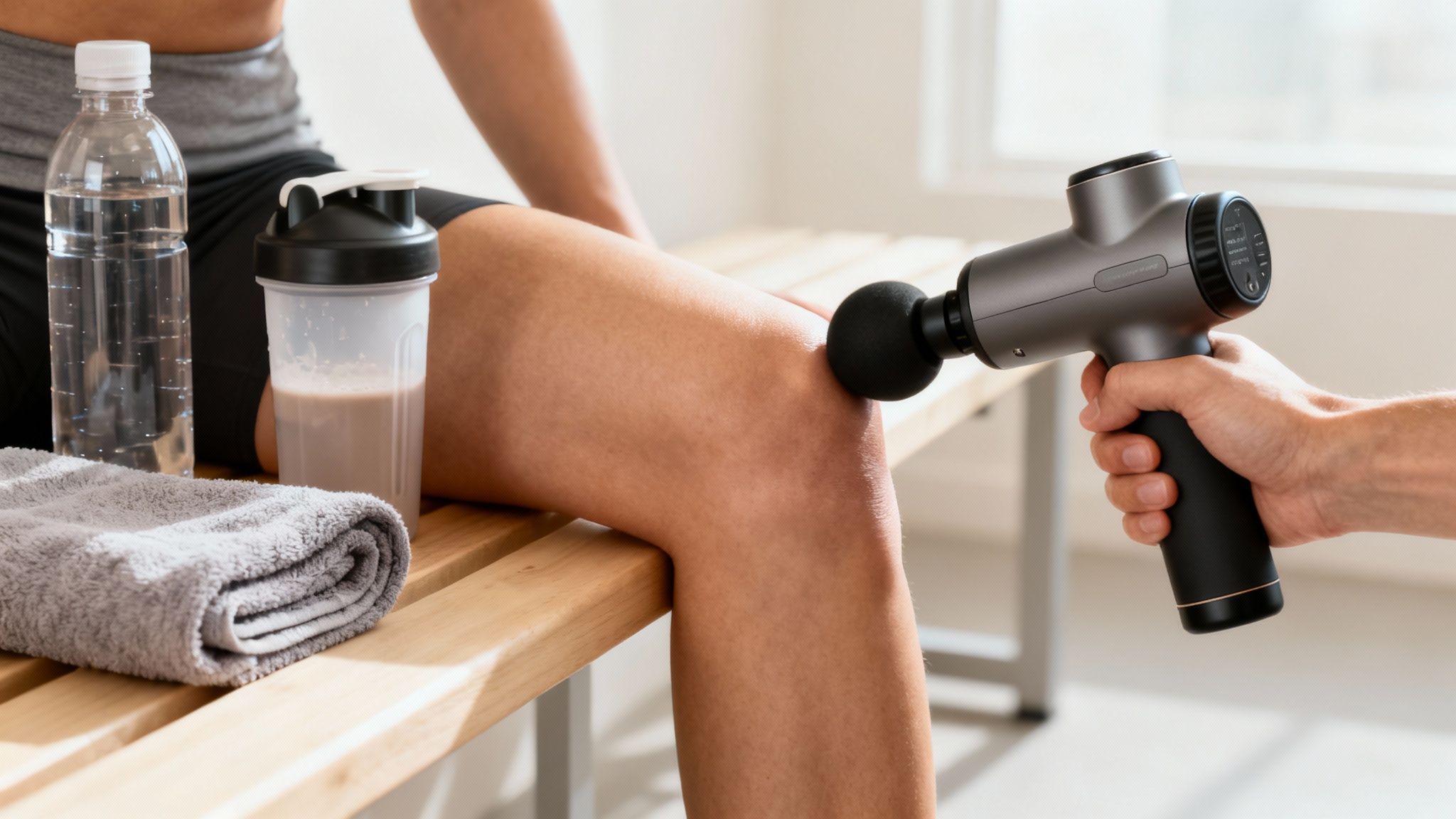
A powerful tool in the active recovery toolbox is a percussive massage gun. Using a device like the Cryotex massage gun on your off days can do wonders for supporting circulation and easing muscle tension.
"I run a few times a week, and the Cryotex has been a game-changer for my tight calves. It’s quiet, powerful, and helps me feel ready for my next run." - Jessica T., Chicago, IL
Here’s a simple routine you can try:
- For Quads and Hamstrings: Sit down comfortably. Glide the flat or round head attachment up and down the muscle for 60-90 seconds, avoiding your kneecap.
- For Your Back: Use the fork or ball attachment to work the muscles alongside your spine, but be careful not to hit the bone.
- For Shoulders and Chest: Switch to the bullet head to target knots around your shoulder blades and pecs. Spend 30-60 seconds on any tight spot.
By adding these active techniques to your routine, you're not just recovering—you’re actively prepping your body for the next challenge. For more ideas on leveling up your recovery game, check out our guide on the best recovery tools for athletes.
A Few Final Pointers on Injury Prevention
We’ve walked through the fundamentals of building a resilient body and recovering like a pro. Let's finish with a quick Q&A to clear up common questions.
What Are the Biggest Mistakes That Lead to Injuries?
It’s usually the simple stuff. People skip warm-ups, ramp up their training too fast, or let their form get sloppy. The biggest one? Ignoring what their body is telling them.
Most injuries happen when we push ourselves beyond our current limits without building a solid foundation first.
The smartest athletes know that consistency beats intensity every time. Trying to become a hero overnight is a recipe for a setback.
How Often Should I Use a Massage Gun for Prevention?
For general maintenance, using a massage gun like the Cryotex three or four times a week is a fantastic habit. Think of it as part of your body’s regular upkeep.
A quick one- to two-minute session on the muscles you just worked can do wonders for reducing next-day soreness. On rest days, you can spend a bit more time working through any tight spots to support your mobility.
Should I Focus More on Strength or Flexibility?
The real answer is: you need a healthy dose of both. They work together.
Strength training builds the “armor” that protects your joints from impact. Flexibility and mobility ensure your joints can move through their full, natural range of motion.
If I Feel a Little Pain During a Workout, Should I Stop?
Absolutely. You should never push through sharp, sudden, or worsening pain. That’s your body’s fire alarm telling you to stop immediately.
That said, you also need to learn the difference between the burn of muscle fatigue and actual injury pain. If you feel a minor, dull ache that’s new, it’s wise to stop that particular exercise and see how it feels.
At BestMassageGun.com, we believe smart recovery is the secret to consistent performance. Taking care of your body shouldn’t be a chore.
