

Posted by Jonathan Atan
on December 04, 2025

Ever get that stiff, creaky feeling when you stand up after being glued to your chair? It's more than just a minor annoyance—it's your body's way of saying it’s tired of being still. The main reason for this muscle stiffness after sitting is simple: our bodies are designed to move, not stay parked in one position for hours.
When you sit for long periods, blood flow slows down, your hip flexors tighten up, and your glute muscles can essentially "go to sleep." This inactivity leads to that familiar achy feeling, as your muscles have been stuck in the same position for too long.
Understanding Why Sitting Causes Stiffness
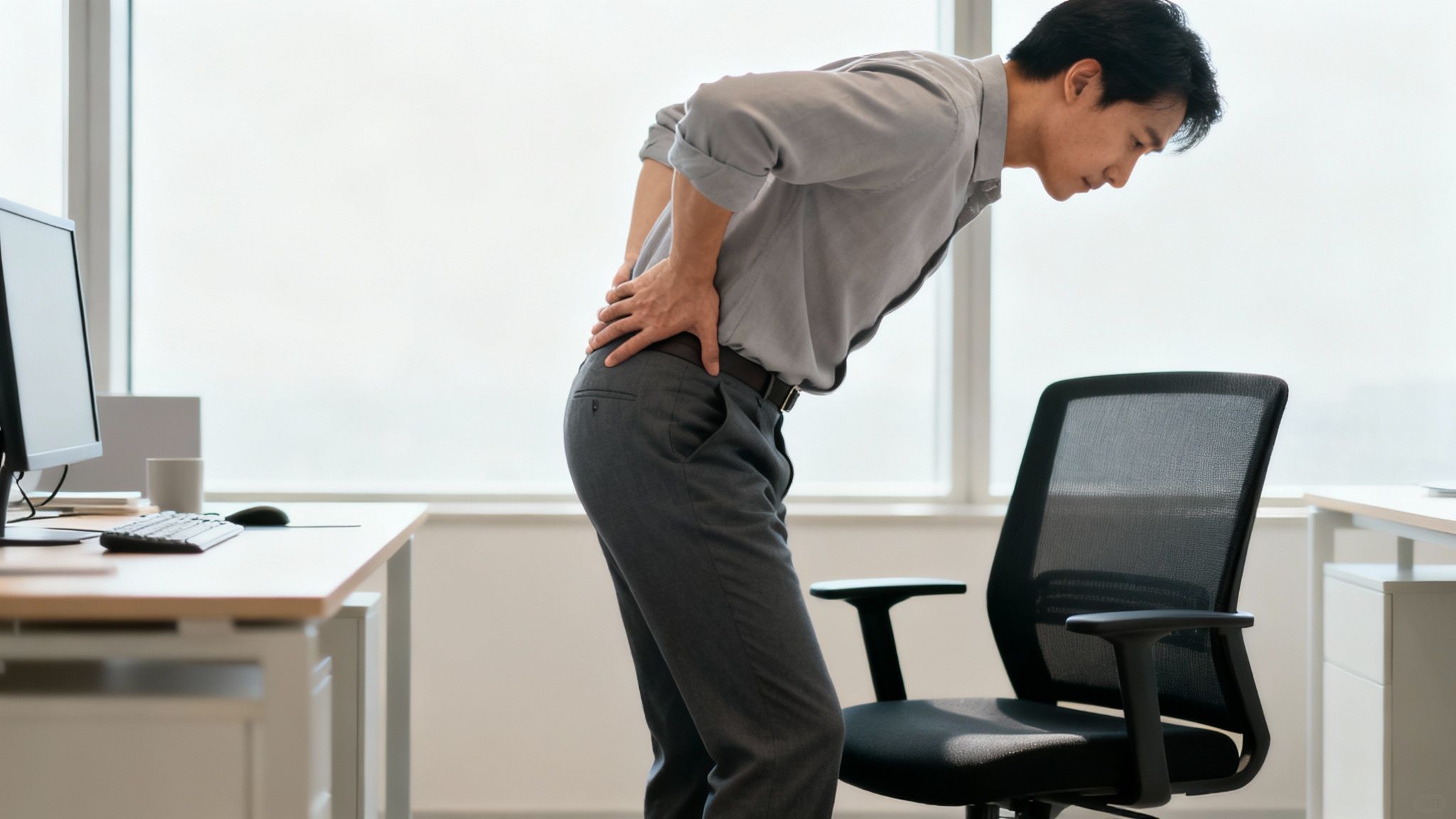
When you sit for hours, it’s not just about feeling a little tight. Your body has a real, physiological reaction to being sedentary, creating a domino effect of discomfort that can impact your neck, back, and legs.
Think of it like a traffic jam in your circulatory system. Your muscles need a steady stream of oxygen-rich blood to stay limber and healthy. Sitting can compress blood vessels, especially in your lower body, causing a slowdown. This reduced circulation is a major reason why your legs, glutes, and lower back start to feel stiff. If you're looking for ways to get things moving again, you can learn how to improve blood circulation naturally in our detailed guide.
To give you a clearer picture, here’s a quick breakdown of what’s happening when that stiffness kicks in.
| Quick Guide to Tackling Stiffness from Sitting |
| :--- | :--- | :--- |
| What Causes It | How Your Body Reacts | Your First Move |
| Prolonged Inactivity: Sitting keeps your body in one fixed position. | Reduced Blood Flow: Your circulatory system slows, limiting oxygen to your muscles. | Stand Up & Move: Even 30 seconds of walking helps restore blood flow. |
| Static Muscle Contraction: Hip flexors shorten while back muscles over-stretch. | Tight Hips & Weak Glutes: This imbalance can pull on your lower back, causing aches. | Quick Stretches: A simple hip flexor or glute stretch can offer instant relief. |
| Poor Ergonomics: Slouching or an improper chair setup creates strain. | Postural Strain: Your spine, neck, and shoulders carry an uneven load. | Postural Reset: Sit up straight, roll your shoulders back, and gently tuck your chin. |
This table is just the starting point. Let’s dive a bit deeper into the specific culprits behind that all-too-familiar ache.
Key Factors Behind the Discomfort
The problem with prolonged sitting is that it’s a full-body issue, creating a chain reaction that can throw your posture and muscle balance off. Here’s a closer look at what’s happening:
- Shrinking Hip Flexors: Your hip flexors are locked in a shortened, contracted state when you're seated. Day after day, they can become chronically tight and start tugging on your lower back.
- Sleeping Glutes and Legs: While you're sitting, your body’s largest muscles—your glutes—aren't engaged. This "gluteal amnesia" can make them weak, which affects your stability and forces other muscles to work overtime.
- The Keyboard Hunch: Leaning forward over a desk puts a lot of strain on your neck, shoulders, and spine. This posture can become a bad habit, creating chronic tension that lingers long after you've stood up.
“The ache I used to get in my lower back after a day of Zoom calls was brutal. Taking a two-minute stretch break every hour has made a massive difference. It's a small change, but my body thanks me for it.” - Jessica R., Chicago, IL
Understanding these root causes is the first step toward relief. Once you know why you’re stiff, you can start taking the right actions to feel better and prevent the pain from returning.
Easy Stretches You Can Do at Your Desk
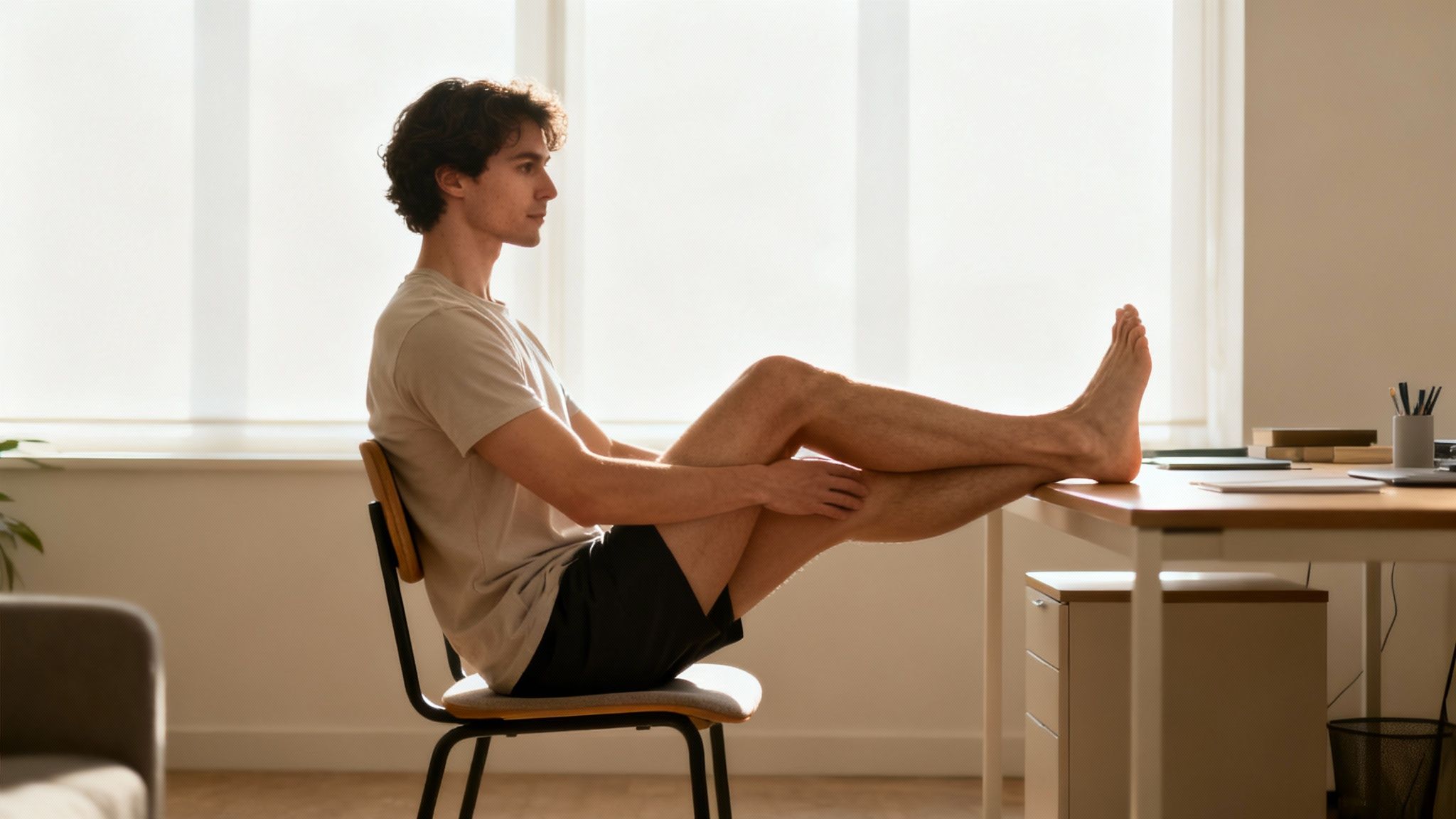
You don’t need to roll out a yoga mat to fight back against muscle stiffness after sitting all day. One of the best ways to combat that locked-up feeling is to get ahead of it with quick, simple movements you can do right at your desk.
Think of these as two-minute resets—just enough to wake up dormant muscles, restore blood flow, and break the cycle of stiffness. These aren't complicated routines; they’re designed to be discreet and effective, so you can do them without turning your workspace into a gym.
Stretches for Your Neck and Shoulders
When you spend hours staring at a screen, your head naturally creeps forward, putting strain on your neck and upper back. This can lead to tension headaches and that familiar ache between the shoulder blades.
A couple of simple moves can make a world of difference:
- Gentle Neck Tilt: While sitting, slowly let your right ear fall toward your right shoulder. You're looking for a gentle stretch, not a strain. Hold it for 15-20 seconds, then repeat on the left side. Let gravity do the work.
- Shoulder Rolls: Breathe in and shrug your shoulders up toward your ears. As you breathe out, roll them back and down, feeling your shoulder blades gently come together. Do this 5-10 times to help undo the tension from hunching.
Don't forget to breathe! Deep, steady breathing sends oxygen to your muscles, helping them relax and release tension much more effectively.
Targeting Your Back and Hips
Your lower back and hips often take the biggest hit from sitting. Your hip flexors can get short and tight while your glutes become underactive, creating an imbalance that pulls on your spine and causes that nagging ache.
The Seated Cat-Cow is fantastic for getting your spine moving again. Place your hands on your knees. On an inhale, arch your back and look up toward the ceiling (Cow pose). As you exhale, round your spine and drop your chin to your chest (Cat pose). Flow between these for 30-60 seconds to wake up your entire back.
For your hips, the Seated Figure-Four Stretch is a great choice. Cross your right ankle over your left knee, creating a "4" shape with your legs. Gently press down on your right knee to feel a deep stretch in your glute and hip. For a deeper stretch, lean your torso forward. Hold for 30 seconds before you switch legs.
If your hips are a consistent problem area, you can dive deeper with our guide on the best stretches for tight hip flexors.
Rethinking Your Posture to Prevent Stiffness
Let’s be honest—the old advice to "sit up straight" is hard to follow all day. You might remember for a minute or two, but soon enough, you're back to slouching. The real secret to preventing muscle stiffness after sitting isn’t about forcing perfect posture; it's about creating an environment that encourages it naturally.
Lasting postural support comes from smart, simple adjustments, not from trying to be rigid. It’s about setting up your workspace so it works for you, not against you. A great first step is investing in gear that does the heavy lifting. Many people find that one of the best ergonomic office chairs for back pain makes a massive difference by providing the lumbar support your spine needs.
Beyond the chair, tiny tweaks can have a huge impact. For instance, your monitor should be positioned so the top of the screen is at or just below eye level. This simple change helps you avoid that dreaded "tech neck" from craning forward for hours.
Your Quick Posture Reset Checklist
Instead of trying to lock yourself into one "perfect" position, think in terms of active sitting. This just means making small, frequent adjustments throughout the day to keep your body aligned and prevent your muscles from seizing up.
Anytime you feel that familiar stiffness creeping in, run through this quick mental checklist:
- Feet Flat: Are both feet planted firmly on the floor? If not, adjust your chair height or use a footrest. This is the foundation of good posture.
- Spine Supported: Is your lower back touching the lumbar support of your chair? You want to feel a gentle press, not a major arch. Aim for a neutral, relaxed spine.
- Shoulders Down: Take a breath and let your shoulders drop away from your ears. Many of us carry tension there without even realizing it.
"I used to end every day with a knot in my neck. Setting my monitor on a stack of books to raise it to eye level was a free fix that made a world of difference." - David L., New York, NY
The goal isn't perfection. It's about making these small, consistent corrections all day long. Each little reset is a win against stiffness.
Using a Massage Gun for Targeted Relief
Sometimes, stretching alone doesn't cut it for those deep, stubborn knots. That’s when a massage gun can be a great tool for targeted relief. Percussive therapy is designed to help release deep-seated tension and support circulation, tackling the root causes of muscle stiffness after sitting.
A quality device like the Cryotex massage gun uses rapid, targeted pulses to work deep into muscle tissue. This action helps boost blood flow and release the metabolic byproducts that can build up and cause soreness. It's like having a deep-tissue massage ready to go whenever you need it, especially for those tight glutes, hamstrings, and that aching lower back.
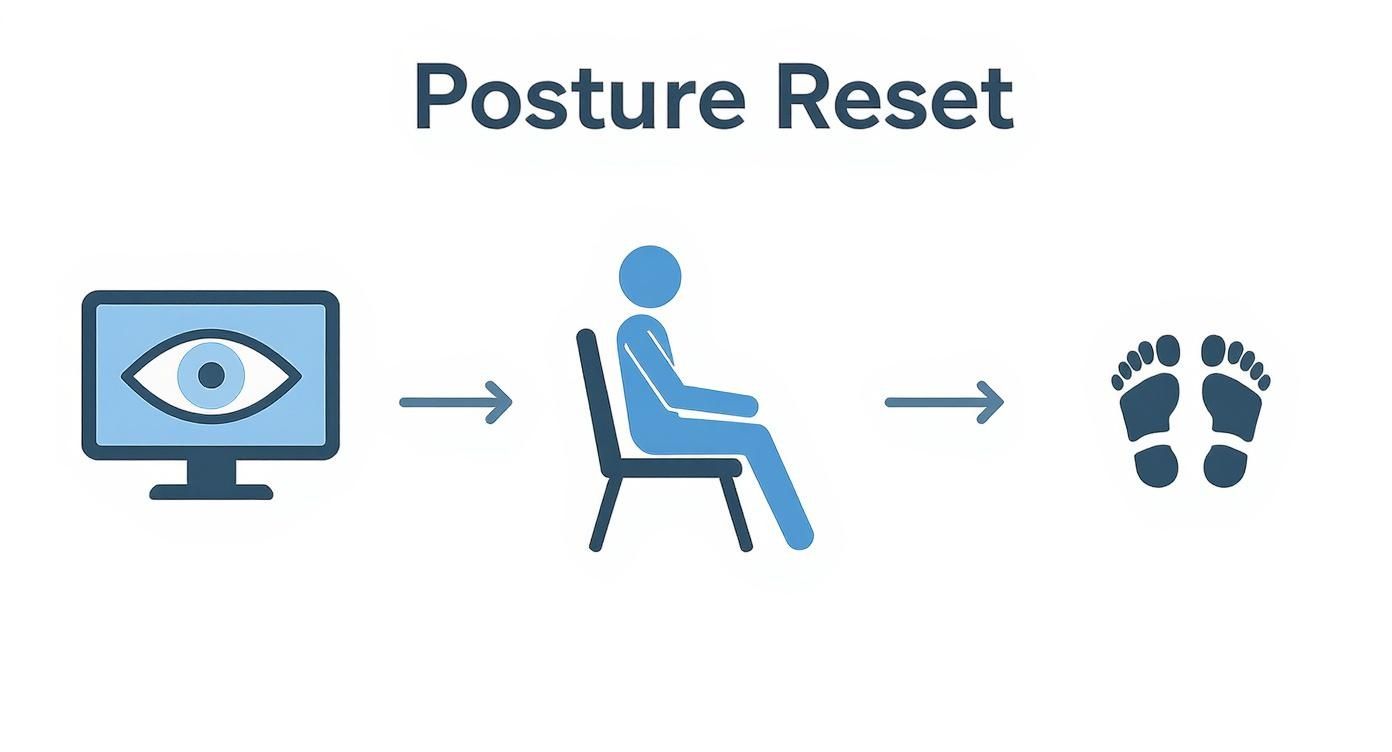
This quick posture check is a great visual reminder for your workday. Keeping your monitor at eye level, your back supported, and your feet flat on the floor is a simple but powerful way to help stop stiffness before it starts.
Your Quick Massage Gun Routine
Getting started is easy. The key is using the right attachment and technique for each muscle group.
- For Your Lower Back: Use the soft, cushioned head. Keep the speed on a low setting and "float" the gun over the muscles on each side of your spine. Never press directly on your spine or bones. Just 60-90 seconds is enough to help release tension.
- For Glutes and Hamstrings: The classic ball attachment is perfect here. These larger muscles can often handle a bit more intensity. Try sitting down, crossing one leg over the other, and working the gun over the glute of that crossed leg to help open up the hip before moving down to your hamstrings.
- For Neck and Shoulders: Use the fork (two-pronged) head to carefully work the muscles along your upper spine and across your traps. Again, stay off the bone and let the gun do the work.
Scientifically, stiffness can be complex. When you sit for too long, it can cause changes in muscle tissue, partly due to reduced calcium ion release, which makes it harder for the muscle to contract and relax properly. This contributes to that locked-up feeling. You can discover more research about neck muscle stiffness and its link to spending hours at a computer.
"The Cryotex has been a lifesaver for my tight hips. After a long day of editing photos, 90 seconds on my glutes and hamstrings makes me feel human again. It's surprisingly quiet, too." - Marcus P., Los Angeles, CA
Knowing how to use these tools properly can make a big difference. For a more detailed guide, check out our post on what a massage gun does for your muscles and how it supports recovery.
Building a Daily Routine to Stay Limber
Getting lasting relief from muscle stiffness after sitting isn’t about a massive lifestyle overhaul. It’s all about building small, consistent habits. The goal is to weave simple movements into your day until they become second nature.
This isn't about jamming more into your already-packed schedule. It's about making your existing routine work for your body. Research is clear: sitting for hours can lead to a host of problems. One study found that 54.4% of people with existing knee pain reported that prolonged sitting made it worse. You can read the full research about sitting-related pain to see just how significant the impact is.
Weaving Movement Into Your Day
So, how do you actually do it?
Start small. Set a recurring timer on your phone or watch to stand up every 30-45 minutes. Try taking phone calls while walking around your office or home. And don’t forget hydration—keeping your muscles hydrated is a simple way to help them stay flexible.
You can also look beyond just stretching. Passive recovery methods can make a big difference in how you feel day-to-day. For example, you can unlock the power of sauna for muscle recovery to gently ease tension throughout your body.
A great way to end the day is with a quick, two-minute massage gun session on your glutes and lower back. Using a tool like the Cryotex massage gun while you relax on the couch can help boost circulation and release built-up tension, setting you up for a much more comfortable morning.
Got Questions? We’ve Got Answers.
Here are a few quick answers to the questions we hear most often about tackling stiffness from sitting all day.
How quickly can I expect to feel better?
You'll likely feel some immediate relief the very first time you do a few good stretches or use a massage gun. It's that "ahh, that's better" moment.
But for real, lasting change, consistency is key. If you start building small movement breaks and better posture habits into your workday, you may notice a major drop in chronic stiffness within a week or two. The goal is to prevent that muscle stiffness after sitting from building up in the first place.
Should I use heat or ice for stiffness?
For the general, achy stiffness you get from sitting (not from a fresh injury), heat is usually the way to go. Heat helps promote blood flow, which can help tight, tense muscles relax.
Try a warm shower or a heating pad across your lower back or shoulders for about 15 minutes. Save ice for new injuries where you're trying to reduce swelling and inflammation.
"I always thought I needed ice for my back pain after work, but switching to a heating pad for 15 minutes before bed was a game-changer for my morning stiffness." – Sarah K., a happy customer from our community.
Can a massage gun make stiffness worse?
When used correctly, a massage gun can be a fantastic tool for reducing stiffness. The trick is to listen to your body.
Always start on the lowest speed and avoid pressing directly onto bones, joints, or your spine. It should feel like a deep, satisfying massage, not a painful one. If you feel any sharp pain, back off immediately. Just 60-90 seconds on a large muscle group like your glutes or hamstrings is often all it takes to feel the benefits.
At BestMassageGun.com, our mission is to provide you with simple, effective ways to feel your best every day.
